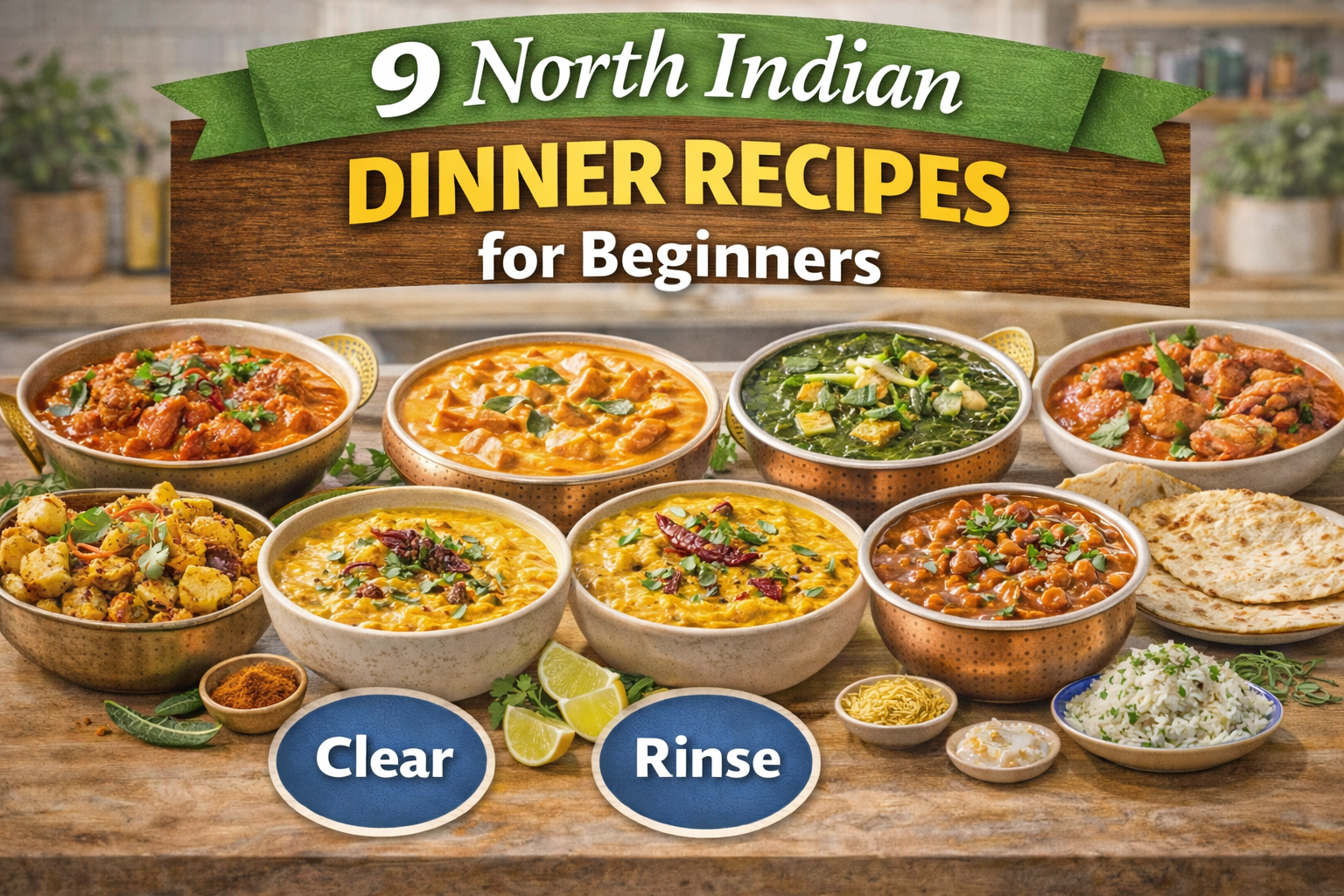
9 North Indian Dinner Recipes for Beginners : Stepping into the world of North Indian cooking for the first time can feel like entering a bustling spice market—vibrant, exciting, but perhaps a little overwhelming. The aroma of cumin sizzling in hot oil, the deep red hue of a perfectly spiced gravy, the sight of soft, golden rotis fresh off the tawa—these are the sensory experiences that define the cuisine of a region known for its rich culinary heritage. For a beginner, the question is often: where do I start?
The answer is simpler than you might think. North Indian cuisine, at its heart, is built on a foundation of a few core techniques and a handful of essential spices. Once you understand the basics—like the art of the tadka (tempering) and how to build a simple onion-tomato masala—you unlock the ability to create a stunning array of dishes. This collection of 9 North Indian dinner recipes is carefully curated for beginners. These are the dishes that home cooks across the region make for their families on ordinary weeknights. They are forgiving, adaptable, and deeply satisfying. They require no special equipment, no hard-to-find ingredients, and no advanced culinary skills. All they ask is a little patience and a willingness to enjoy the process.
So, tie on your apron, gather your spices, and let’s embark on a delicious journey into the heart of North Indian home cooking. By the time you’ve worked through these 9 recipes, you will have built a solid foundation of skills and a repertoire of meals that will serve you for a lifetime.
See More : 7 Simple Dal Recipes for Everyday Cooking
12 Light & Healthy Breakfast Recipes for Daily Routine
The Beginner’s Guide to North Indian Cooking
Before we dive into the recipes, let’s cover a few essential concepts that will make your cooking experience smoother and more successful.
- The Holy Trinity of Aromatics: Many North Indian dishes begin with a base of onions, ginger, and garlic. Onions are typically sautéed until golden brown, which provides a sweet, deep foundation. Ginger and garlic, often used as a paste or finely chopped, add warmth and pungency. Cooking this base properly—taking the time to achieve that golden-brown color—is the secret to a flavorful gravy.
- The Magic of the Tadka (Tempering): This is a fundamental technique. It involves heating oil or ghee in a small pan and frying whole spices (like cumin seeds, mustard seeds, or dried red chilies) for a few seconds until they crackle and release their aromatic oils. This flavored oil is then poured over a finished dish—like dal—or used as the first step in a curry. It is a quick way to add an incredible depth of flavor.
- Building a Masala: Most curries follow a similar pattern. After sautéing the aromatics, you add ground spices (like turmeric, coriander, and red chili powder). This mixture, often called a masala, is cooked for a minute or two to “bloom” the spices, which intensifies their flavor. Then, you add tomatoes, which provide acidity and form the base of the gravy. Cooking this masala until the oil separates from the mixture is a key sign that your curry base is ready.
- Essential Spices for Your Pantry: You don’t need dozens of spices to start. These seven will cover almost all the recipes in this guide:
- Cumin Seeds (Jeera): For tempering and adding an earthy, warm flavor.
- Turmeric Powder (Haldi): For color and its mild, earthy flavor.
- Coriander Powder (Dhania): A foundational spice with a lemony, slightly sweet flavor.
- Red Chili Powder (Lal Mirch): For heat and color. Start with less and adjust to your taste.
- Garam Masala: A fragrant blend of spices added at the end of cooking for a final layer of warmth and aroma.
- Asafoetida (Hing): A pungent resin used in tiny quantities in tadkas, especially for lentil dishes. It aids digestion and adds a unique savory note.
- Salt: The most important ingredient of all!
The Recipes: 9 Beginner-Friendly North Indian Dinners
Here are 9 recipes that will build your confidence and fill your kitchen with wonderful aromas.
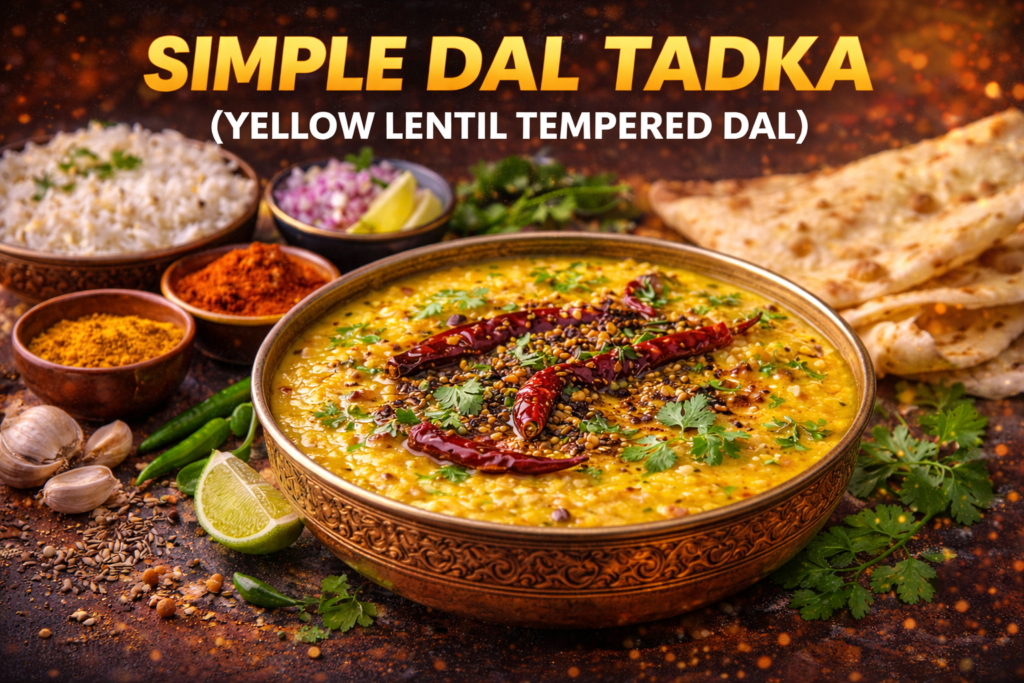
1. Simple Dal Tadka (Yellow Lentil Tempered Dal)
This is the ultimate comfort food and the first dal many North Indians learn to make. It is simple, nourishing, and the tadka is where the magic happens.
Why It’s Great for Beginners: It teaches you the fundamental technique of tempering (tadka) and how to cook lentils to the perfect soft consistency.
Time: 30 minutes
Ingredients:
- 1 cup toor dal (split pigeon peas) or masoor dal (red lentils)
- 2.5 cups water
- 1/2 teaspoon turmeric powder
- Salt to taste
For the Tadka:
- 2 tablespoons ghee or oil
- 1 teaspoon cumin seeds
- 1 medium onion, finely chopped
- 2 cloves garlic, thinly sliced
- 1-2 green chilies, slit lengthwise
- 1/2 teaspoon red chili powder (optional)
- Fresh coriander, chopped, for garnish
Instructions:
- Cook the Dal: Rinse the dal thoroughly until the water runs clear. In a pot or pressure cooker, combine the dal, water, and turmeric. If using a pot, bring to a boil, then simmer covered for 25-30 minutes until soft. If using a pressure cooker, cook for 3-4 whistles. Mash the dal slightly with the back of a spoon. Add salt to taste.
- Prepare the Tadka: Heat ghee in a small pan. Add the cumin seeds and let them sizzle for a few seconds. Add the chopped onions and sauté until golden brown. Add the sliced garlic and green chilies and sauté for another minute until fragrant. If using, add the red chili powder and stir for a few seconds.
- Combine: Pour the entire tadka over the cooked dal. Mix well.
- Garnish and Serve: Garnish with fresh coriander. Serve hot with steamed rice or roti .
2. Aloo Gobi (Potato and Cauliflower Stir-fry)
Aloo Gobi is a dry vegetable dish that is a staple in countless North Indian homes. It is simple, rustic, and packed with flavor.
Why It’s Great for Beginners: It teaches you how to cook vegetables with spices and how to achieve the right texture—tender, with slightly crispy edges.
Time: 30 minutes
Ingredients:
- 2 tablespoons oil
- 1 teaspoon cumin seeds
- 1 medium onion, finely chopped
- 1 teaspoon ginger-garlic paste
- 2 medium potatoes, peeled and cubed
- 1 small cauliflower, cut into florets
- 1/2 teaspoon turmeric powder
- 1 teaspoon coriander powder
- 1/2 teaspoon red chili powder
- Salt to taste
- Fresh coriander, chopped, for garnish
Instructions:
- Heat oil in a large pan or kadhai over medium heat. Add the cumin seeds and let them sizzle.
- Add the chopped onion and sauté until golden brown.
- Add the ginger-garlic paste and sauté for another minute.
- Add the potato cubes and cauliflower florets. Stir well to coat them with the onion mixture.
- Add the turmeric, coriander powder, red chili powder, and salt. Mix until the spices evenly coat the vegetables.
- Cover the pan and cook on low heat for 15-20 minutes, stirring occasionally, until the vegetables are tender. If the pan seems dry, you can sprinkle a little water to prevent sticking.
- Remove the lid and cook for another 2-3 minutes to evaporate any excess moisture and let the vegetables get slightly crispy edges.
- Garnish with fresh coriander and serve hot with roti or as a side dish with dal and rice .
3. Quick Palak Paneer (Spinach and Cottage Cheese Curry)
Palak Paneer is a restaurant favorite, but it is surprisingly simple to make at home. This beginner-friendly version uses blanched spinach for a vibrant, creamy gravy.
Why It’s Great for Beginners: It introduces you to blanching and pureeing vegetables, and the concept of a creamy, no-onion gravy (if you skip the onion).
Time: 25 minutes
Ingredients:
- 200 grams paneer, cubed
- 250 grams fresh spinach, washed thoroughly
- 1-2 green chilies, chopped
- 1 teaspoon ginger-garlic paste
- 1 tablespoon oil or ghee
- 1/2 teaspoon cumin seeds
- 1/4 cup fresh cream (optional)
- Salt to taste
- 1/2 teaspoon garam masala
Instructions:
- Blanch the Spinach: Bring a large pot of water to a boil. Add the spinach leaves and blanch for 2 minutes until wilted. Drain immediately and transfer to a bowl of ice-cold water to stop the cooking and preserve the green color. Drain well.
- Make the Puree: Blend the blanched spinach with the green chilies into a smooth puree. Set aside.
- Cook the Base: Heat oil in a pan. Add the cumin seeds and let them sizzle. Add the ginger-garlic paste and sauté for a minute.
- Add Spinach: Add the spinach puree to the pan. Add salt and cook for 4-5 minutes, stirring occasionally.
- Add Paneer and Cream: Gently add the paneer cubes and stir. If using, add the fresh cream and mix well. Simmer for another 2-3 minutes.
- Finish: Sprinkle with garam masala and serve hot with roti, naan, or rice .
4. Jeera Aloo (Cumin Potatoes)
This simple, dry potato dish is a testament to how a few humble ingredients can create something truly delicious. It is a common side dish and a perfect accompaniment to any meal.
Why It’s Great for Beginners: It has a very short ingredient list and is nearly impossible to mess up. It teaches you about tempering with whole spices.
Time: 20 minutes
Ingredients:
- 3-4 medium potatoes, boiled, peeled, and cubed
- 2 tablespoons oil
- 1 teaspoon cumin seeds
- 1-2 green chilies, finely chopped
- 1/2 teaspoon turmeric powder
- 1/2 teaspoon red chili powder
- Salt to taste
- Fresh coriander, chopped, for garnish
Instructions:
- Heat oil in a pan over medium heat. Add the cumin seeds and let them sizzle for a few seconds.
- Add the chopped green chilies and sauté for a few seconds.
- Add the turmeric and red chili powder. Stir quickly to combine with the oil. Be careful not to burn the spices.
- Add the boiled potato cubes and salt. Stir gently to coat the potatoes evenly with the spices.
- Cook for 5-7 minutes, stirring occasionally, until the potatoes are heated through and develop slightly crispy edges.
- Garnish with fresh coriander and serve hot .
5. Masoor Ki Dal (Whole Red Lentil Curry)
This dal uses whole red lentils (sabut masoor), which have a brownish skin and cook up with a lovely, hearty texture. It is a comforting and protein-rich dish.
Why It’s Great for Beginners: It builds on the dal-making skills from Recipe 1 and introduces cooking with whole lentils, which have a slightly different texture.
Time: 35 minutes (plus pressure cooking time)
Ingredients:
- 1 cup whole red lentils (sabut masoor), rinsed
- 3 cups water
- 1/2 teaspoon turmeric powder
- Salt to taste
For the Tadka:
- 2 tablespoons ghee or oil
- 1 teaspoon cumin seeds
- 1 medium onion, finely chopped
- 1 teaspoon ginger-garlic paste
- 1-2 green chilies, slit
- 1 tomato, finely chopped
- 1/2 teaspoon red chili powder
- Fresh coriander, chopped, for garnish
Instructions:
- Cook the Dal: In a pressure cooker, combine the rinsed lentils, water, and turmeric. Cook for 4-5 whistles until the lentils are soft. Allow the pressure to release naturally. Mash the dal slightly. Add salt to taste.
- Prepare the Tadka: Heat ghee in a separate pan. Add the cumin seeds and let them sizzle. Add the chopped onion and sauté until golden brown. Add the ginger-garlic paste and green chilies and sauté for another minute. Add the chopped tomato and cook until soft. Add the red chili powder and stir.
- Combine: Pour the tadka into the cooked dal and mix well. Simmer for 5 minutes to allow the flavors to meld.
- Garnish and Serve: Garnish with fresh coriander and serve hot with rice or roti .
6. Bhindi Masala (Spiced Okra Stir-fry)
Bhindi (okra) can be intimidating because of its tendency to become slimy, but this dry, spiced preparation is a great way to learn how to cook it perfectly. The key is to wash and dry it thoroughly before chopping.
Why It’s Great for Beginners: It teaches you an important technique for a specific vegetable and how to achieve a dry, flavorful stir-fry.
Time: 25 minutes
Ingredients:
- 500 grams bhindi (okra), washed, dried completely, and chopped into 1-inch pieces
- 2 tablespoons oil
- 1 teaspoon cumin seeds
- 1 medium onion, finely chopped
- 1 teaspoon ginger-garlic paste
- 1/2 teaspoon turmeric powder
- 1 teaspoon coriander powder
- 1/2 teaspoon red chili powder
- 1/2 teaspoon amchur (dry mango powder)
- Salt to taste
Instructions:
- Heat oil in a wide pan over medium heat. Add the cumin seeds and let them sizzle.
- Add the chopped onion and sauté until golden brown.
- Add the ginger-garlic paste and sauté for a minute.
- Add the chopped bhindi to the pan. Stir well to coat it with oil.
- Add the turmeric, coriander powder, and red chili powder. Mix gently.
- Cook on medium heat, stirring occasionally, for 8-10 minutes. The bhindi will first release moisture, then that moisture will evaporate, and it will begin to brown.
- Once the bhindi is tender and no longer sticky, add the amchur and salt. Mix well and cook for another minute.
- Serve hot with rotis .
7. Mattar Paneer (Peas and Cottage Cheese Curry)
This classic, mildly spiced curry is a favorite across North India. The combination of sweet peas and soft paneer in a tomato-onion gravy is simply irresistible.
Why It’s Great for Beginners: It teaches you how to build a classic onion-tomato masala, the foundation for countless Indian curries.
Time: 30 minutes
Ingredients:
- 200 grams paneer, cubed
- 1 cup green peas (fresh or frozen)
- 2 tablespoons oil or ghee
- 1 teaspoon cumin seeds
- 1 large onion, finely chopped
- 1 teaspoon ginger-garlic paste
- 2 tomatoes, pureed
- 1/2 teaspoon turmeric powder
- 1 teaspoon coriander powder
- 1/2 teaspoon red chili powder
- 1/2 teaspoon garam masala
- Salt to taste
- Fresh coriander, for garnish
Instructions:
- Heat oil in a pan. Add the cumin seeds and let them sizzle.
- Add the chopped onion and sauté until golden brown.
- Add the ginger-garlic paste and sauté for another minute.
- Add the tomato puree. Cook for 4-5 minutes, stirring frequently, until the puree thickens and the oil starts to separate from the masala.
- Add the turmeric, coriander powder, and red chili powder. Stir well and cook for a minute.
- Add 1/2 cup of water to create a gravy. Bring to a simmer.
- Add the green peas and salt. Cook for 3-4 minutes until the peas are tender.
- Gently add the paneer cubes and stir. Cook for 2-3 minutes.
- Sprinkle with garam masala and garnish with fresh coriander. Serve hot with roti, naan, or rice .
8. Vegetable Pulao (Simple One-Pot Rice)
A fragrant and satisfying one-pot meal, vegetable pulao is perfect for a busy weeknight. It is essentially rice cooked with vegetables and whole spices.
Why It’s Great for Beginners: It teaches you a one-pot cooking method and how to use whole spices to flavor a dish.
Time: 30 minutes
Ingredients:
- 1 cup basmati rice, soaked for 15 minutes
- 1 cup mixed vegetables (carrots, beans, peas)
- 1 medium onion, thinly sliced
- 2 tablespoons ghee or oil
- 1 teaspoon cumin seeds
- 1 bay leaf
- 2-3 green cardamoms
- 1-inch cinnamon stick
- 2-3 cloves
- Salt to taste
- 2 cups water
Instructions:
- Drain the soaked rice and set aside.
- Heat ghee in a pressure cooker or a deep pan. Add the cumin seeds, bay leaf, cardamoms, cinnamon, and cloves. Sauté for a few seconds until fragrant.
- Add the sliced onions and sauté until they turn golden brown.
- Add the mixed vegetables and sauté for 2 minutes.
- Add the drained rice and salt. Gently stir to combine.
- Pour in 2 cups of water. Bring to a boil.
- If using a pressure cooker, close the lid and cook for 1 whistle. If using a pan, cover with a tight lid, reduce the heat to low, and simmer for 15 minutes, or until the rice is cooked and the water is absorbed.
- Let it sit for 5 minutes, then fluff with a fork. Serve hot with raita (yogurt dip) .
9. Besan Chilla (Gram Flour Pancakes)
While often eaten for breakfast or a snack, besan chilla also makes for a light, protein-packed dinner. These savory pancakes are endlessly customizable and come together in minutes.
Why It’s Great for Beginners: It is a no-fail recipe that requires no advanced techniques—just mixing a batter and cooking it like a pancake.
Time: 15 minutes
Ingredients:
- 1 cup besan (gram flour)
- 1/2 cup finely chopped onions
- 1/4 cup finely chopped tomatoes
- 2 tablespoons finely chopped coriander
- 1-2 green chilies, finely chopped
- 1/2 teaspoon cumin seeds
- Salt to taste
- Water, as needed
- Oil, for cooking
Instructions:
- In a mixing bowl, combine the besan, onions, tomatoes, coriander, green chilies, cumin seeds, and salt.
- Gradually add water while whisking to form a smooth batter with a pouring consistency, similar to regular pancake batter. Ensure there are no lumps.
- Heat a non-stick tawa or griddle over medium heat. Lightly grease it with oil.
- Pour a ladleful of batter onto the tawa and gently spread it in a circular motion to form a thin, even pancake.
- Drizzle a few drops of oil around the edges. Cook until the bottom is golden brown and crisp.
- Flip and cook the other side for another minute or two.
- Serve hot with mint chutney or ketchup .
Tips for Beginner Success
- Read the Recipe First: Before you start cooking, read the entire recipe from beginning to end. This helps you understand the flow and ensures you have all your ingredients ready.
- Prep Everything (Mise en Place): North Indian cooking moves quickly once it starts. Have all your onions chopped, your spices measured, and your ginger-garlic paste ready before you turn on the heat.
- Taste as You Go: Salt levels and spice heat are personal. Taste your food at different stages and adjust the seasoning accordingly. Remember, you can always add more, but you cannot take it away.
- Don’t Be Afraid to Make Mistakes: Every cook has had a curry that was too salty or a dal that stuck to the pot. It is all part of the learning process. Be kind to yourself and keep practicing.
- Start with Less Spice: If you are unsure about the heat level, start with half the amount of red chili powder called for. You can always add a pinch of cayenne or a fresh green chili at the end to increase the heat.
Conclusion ( 9 North Indian Dinner Recipes for Beginners )
Embarking on your North Indian cooking journey with these 9 beginner-friendly recipes is an invitation to discover the warmth, flavor, and deep satisfaction that this cuisine offers. You have learned to temper spices, build a masala, cook lentils to perfection, and create vegetable dishes that are anything but boring. These are not just recipes; they are skills that will form the bedrock of your Indian cooking repertoire.
From the comforting simplicity of Dal Tadka to the vibrant flavors of Mattar Paneer, each dish you master will build your confidence and bring you closer to the heart of the North Indian kitchen. So, the next time you crave a home-cooked meal that nourishes both body and soul, you will know exactly where to start. Happy cooking.
4 thoughts on “9 North Indian Dinner Recipes for Beginners”