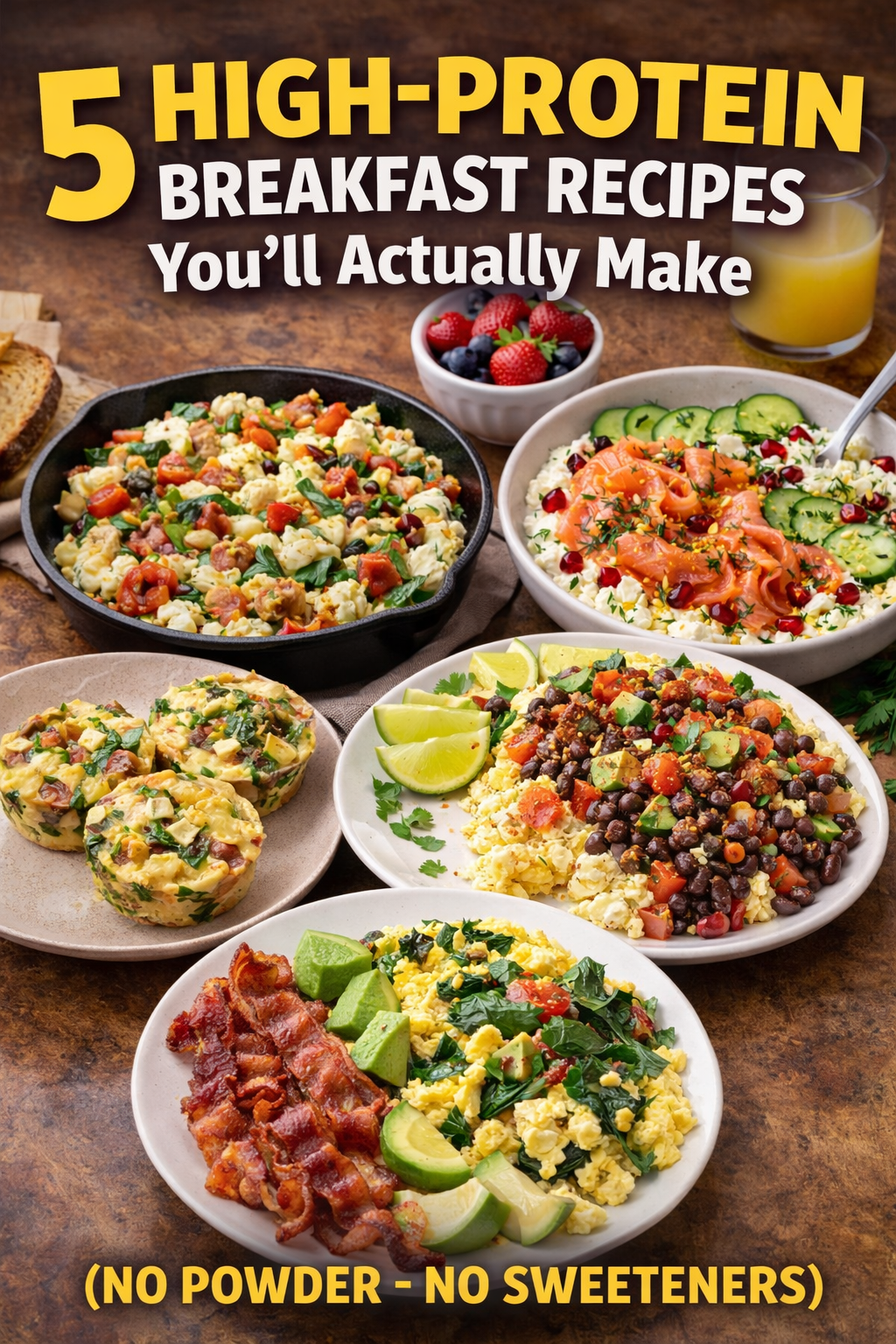
Most high-protein breakfast ideas fall into two traps: protein shakes that leave you hungry an hour later, or sweet yogurt bowls loaded with hidden sugar. These five recipes avoid both. They rely on whole foods—eggs, dairy, fish, legumes, and lean meat. Every serving delivers at least 28 grams of protein. More importantly, each one tastes good enough that you won’t reach for toast or cereal instead.
I’ve written these so you can cook them on a busy Tuesday morning or prep parts ahead for the week. No weird ingredients. No expensive “superfoods.” Just real kitchen techniques that work.5 High-Protein Breakfast Recipes You’ll Actually Make (No Powder, No Sweeteners)
Recipe 1: Skillet Egg White & Turkey Sausage Scramble
Total protein: 38g
Calories: 315
Fat: 12g
Carbs: 9g
Cook time: 10 minutes
Dish count: One skillet, one bowl, one spatula.

Why this combination works
Egg whites provide pure protein with almost no fat. But on their own, they taste bland and rubbery. The single whole egg adds lecithin and fat, which changes the texture to something creamy. Turkey sausage brings salt and smoke, so you don’t need much seasoning. The vegetables add moisture and a little sweetness to balance the savory notes.
Ingredient notes
Egg whites: Use fresh eggs if you have leftover yolks to save for another meal (like homemade mayo or carbonara). Carton egg whites work fine, but shake the carton before pouring because the protein settles. Avoid “egg white substitutes” that have added gums or preservatives—they turn slimy when cooked.
Turkey sausage: Look for breakfast links with under 400mg sodium per serving. Avoid maple-flavored or “breakfast blend” sausages that add sugar. Plain Italian-style turkey sausage also works, but remove the casing and crumble it.
Vegetables: Onion and bell pepper are the baseline. You can swap in zucchini (drain after chopping), mushrooms, or leftover roasted broccoli. Keep total volume to about 1/2 cup or the eggs become watery.
Step-by-step method
- Prep everything before turning on the heat. Dice onion and bell pepper into quarter-inch pieces. Chop spinach into ribbons (stack leaves, roll tightly, slice thin). Cut sausage links into rounds, then quarter the rounds.
- Heat the skillet properly. Use a non-stick pan. Turn the burner to medium. Wait 60 seconds, then spray with olive oil or add 1 teaspoon of butter. The fat should shimmer but not smoke.
- Cook the aromatics. Add onions and peppers. Spread them in a single layer. Do not stir for the first 45 seconds—this lets them brown slightly. Then stir every 30 seconds for 2 minutes total. Onions should look translucent, not browned.
- Add sausage and spinach. Toss in the chopped turkey sausage. Stir for 1 minute to warm it through. Add spinach. It will look like too much, but it wilts fast. Stir constantly for 30 seconds until spinach reduces by 75%.
- Whisk eggs correctly. In a separate bowl, whisk 4 egg whites and 1 whole egg until no streaks remain. Do not whisk hard—you don’t want foam. A gentle fork stir for 20 seconds is enough.
- Pour and wait. Pour eggs over everything in the skillet. Do not stir immediately. Let the eggs sit untouched for 30 seconds. The bottom should begin setting.
- Scrape, fold, repeat. Use a rubber spatula to scrape from the outer edge toward the center. Tilt the pan so raw egg flows to the empty space. Repeat every 20 seconds until eggs are mostly set but still look moist and slightly underdone.
- Finish off heat. Remove the skillet from the burner. The residual heat will cook eggs the rest of the way. Add pepper and paprika now—salt goes on the table, not in the pan (sausage already has plenty).
Common mistakes
- Over-stirring: Makes eggs dry and crumbly. You want large, soft curds.
- High heat: Egg whites burn before they cook through. Medium is the maximum.
- Adding cheese: Cheese adds moisture and salt, but it also makes the scramble heavy. If you must, add 1 tablespoon of parmesan at the very end.
Variations
- Mexican style: Replace spinach with canned diced green chiles. Top with salsa and a dollop of Greek yogurt instead of sour cream.
- Lower sodium: Use fresh turkey breast (diced small) instead of sausage. Add 1/4 teaspoon of smoked paprika and a pinch of sage.
- Dairy-free: Cook in coconut oil instead of butter. Omit cheese entirely.
Storage and reheating
This scramble does not refrigerate well for more than one day. The vegetables release water and make the eggs soggy. If you must meal prep, cook only the sausage and vegetables, then refrigerate. In the morning, reheat the mix in a skillet, then add fresh eggs.
To reheat leftovers: microwave for 30 seconds at 50% power, stir, then another 20 seconds. Never reheat eggs on full power—they turn into rubber.
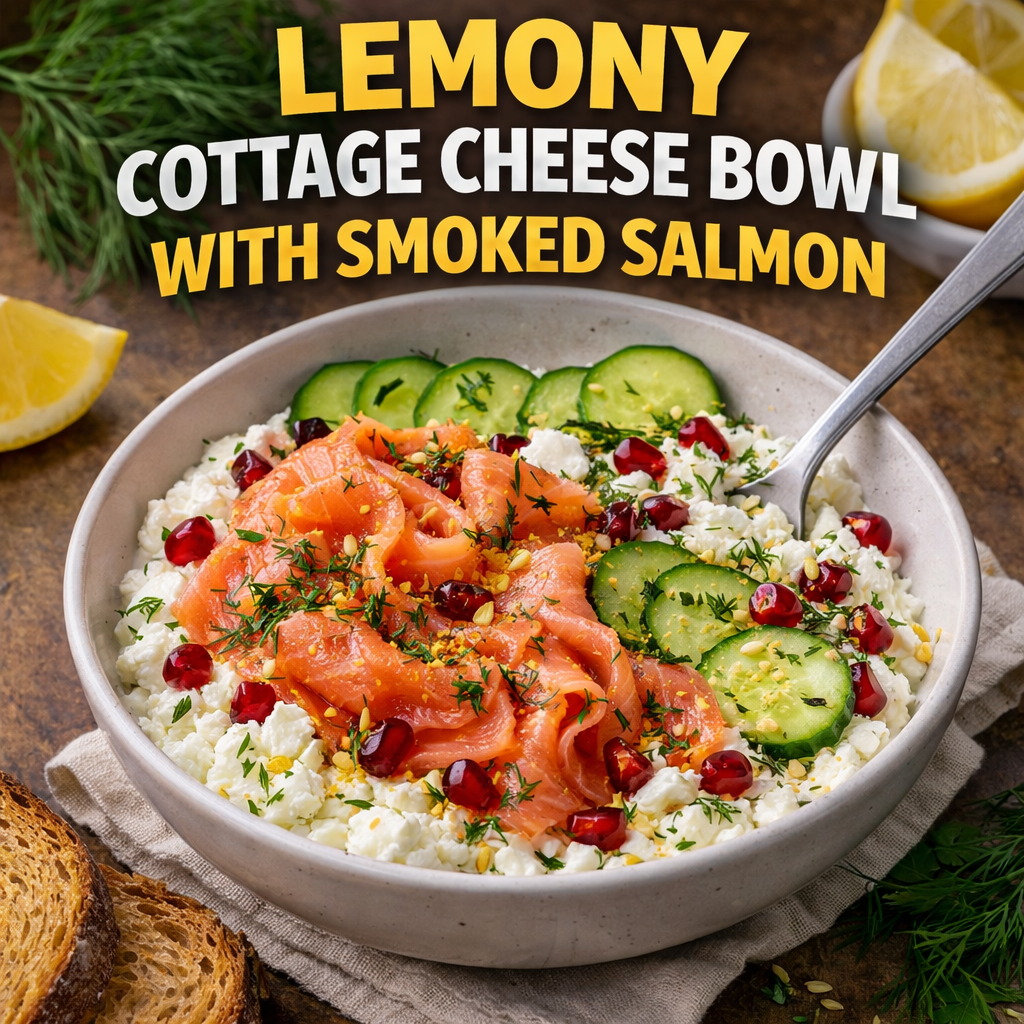
Recipe 2: Lemony Cottage Cheese Bowl with Smoked Salmon
Total protein: 32g
Calories: 290
Fat: 14g
Carbs: 11g
Cook time: 5 minutes (no cooking)
Dish count: One bowl, one spoon, one zester….
Why this works as a breakfast
Most people eat cottage cheese sweet—with peaches or honey. That’s fine, but savory cottage cheese is more satisfying and doesn’t spike your blood sugar. The lemon zest cuts through the dairy richness. Smoked salmon adds protein and omega-3s. Together, they taste like a bagel with lox but without the bread.
Ingredient notes
Cottage cheese: Full-fat (4% milkfat) is essential here. Low-fat or non-fat curds are dry and crumbly, and they don’t carry the lemon flavor well. Look for small curd—large curds feel like eating cheese chunks. If you only have large curd, pulse it twice in a food processor.
Smoked salmon: Buy wild-caught if possible. Farmed salmon has more fat but less flavor. Avoid “smoked salmon trim” or “pieces”—those are the dry ends. Nova or Scottish style are both fine. Keep the salmon cold until you tear it; warm salmon gets mushy.
Lemon: Use an actual lemon, not bottled juice. You need the zest, which contains essential oils that bottled juice lacks. Roll the lemon on the counter under your palm before zesting—it releases more oil.
Fresh dill: Dried dill tastes like hay. Fresh dill is cheap and lasts a week in a glass of water in the fridge. If you can’t find dill, use fresh chives or tarragon.
Step-by-step method
- Let the cottage cheese warm up. Scoop it into a bowl and leave on the counter for 5 minutes. Cold curds are flavorless. Room-temperature curds release their buttery notes.
- Create a well. Use the back of a spoon to press a shallow indent in the center of the cottage cheese. This holds the lemon zest and prevents it from falling off.
- Tear, don’t slice, the salmon. Pull the smoked salmon into bite-sized pieces with your fingers. Tearing leaves ragged edges that catch the lemon and dill. Slicing makes smooth, slippery pieces that slide off.
- Arrange around the edge. Place salmon pieces around the cottage cheese, not on top. This way you can get a bite of salmon alone, or combine it with cheese. Having the option changes how you eat.
- Add cucumber and capers. Slice cucumber thinly—paper-thin using a mandoline or a sharp knife. Scatter capers (rinsed if they’re salt-packed, drained if brined) over everything.
- Zest the lemon directly over the bowl. Hold the lemon sideways. Use a microplane or the fine side of a box grater. Zest only the yellow part—the white pith underneath is bitter. Stop when you see white.
- Finish with fresh dill. Chop the dill just before adding. Wilted dill is fine; dried dill is not. Sprinkle generously. Do not mix. Serve immediately.
Common mistakes
- Stirring everything together: This turns into an unappetizing pink mush. Keep components separate.
- Using too much lemon juice: A teaspoon of juice is fine, but more than that curdles the cottage cheese on contact.
- Skipping the cucumber: The crunch is necessary. Without it, the texture is too soft.
Variations
- No-fish version: Replace salmon with 2 hard-boiled eggs, chopped. Add a sprinkle of smoked paprika to mimic the smokiness.
- Budget swap: Use canned sardines in water instead of salmon. Mash them slightly. Different flavor but still high protein.
- Extra crunch: Add 2 tablespoons of toasted pumpkin seeds or crushed rye crackers.
Storage advice
Do not make this ahead. Cottage cheese weeps water after 30 minutes, and the salmon dries out. If you want to prep, keep ingredients separate: portion cottage cheese in a container, salmon in another, cucumber in a paper-towel-lined bag. Assemble at the table.
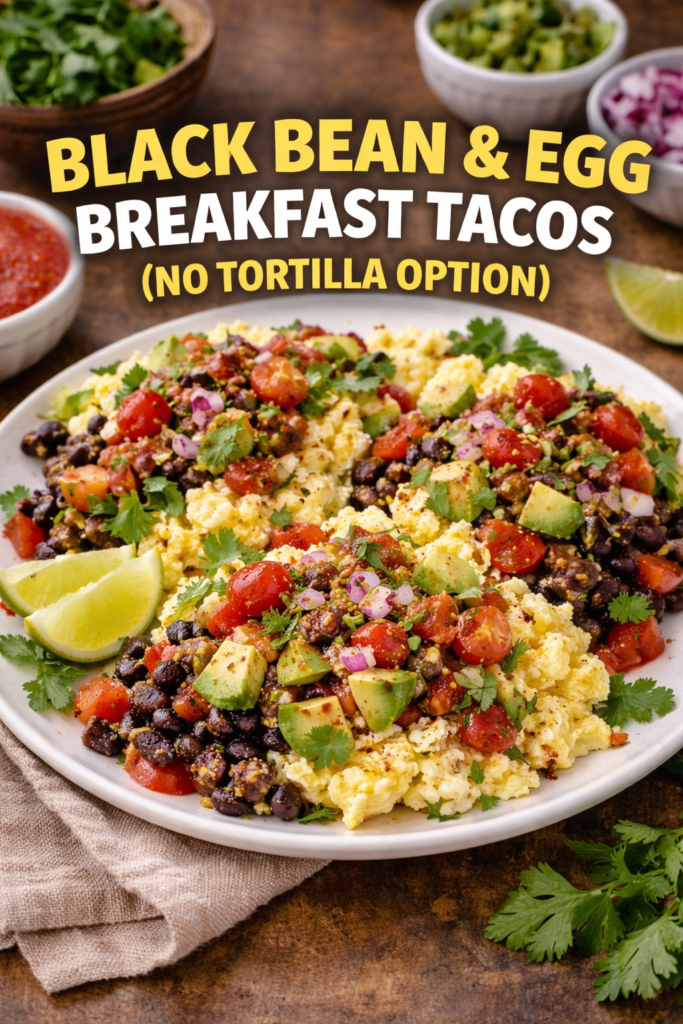
Recipe 3: Black Bean & Egg Breakfast Tacos (No Tortilla Option)
Total protein: 30g (with corn tortillas)
Calories: 410
Fat: 18g
Carbs: 34g
Cook time: 12 minutes
Dish count: Two skillets, one bowl, one fork………
The tortilla question
Corn tortillas are traditional and add 3g protein each. But if you’re avoiding carbs, use large lettuce leaves (romaine or butter lettuce) as wraps. The filling recipe works either way. I’ve written it for tortillas, but I’ve added lettuce instructions at the end.
Ingredient notes
Black beans: Canned are fine. Rinse them thoroughly—the canning liquid tastes metallic and has excess sodium. Dry beans work too, but you’ll need to cook them the day before. Do not skip the rinsing step even with low-sodium cans.
Eggs: Large, grade A. No need to whip them into a frenzy. A few gentle stirs with a fork is enough. Over-beaten eggs become flat and dense when cooked.
Queso fresco: This Mexican fresh cheese crumbles easily and doesn’t melt. It adds salt and creaminess. Substitute feta or cotija cheese if needed. Avoid shredded mozzarella or cheddar—they get stringy and overpower the beans.
Salsa verde: Tomatillo-based salsa, not red tomato salsa. The tanginess cuts through the eggs. If you can’t find salsa verde, use a squeeze of lime and a pinch of salt instead of red salsa.
Step-by-step method
- Warm the tortillas first. Place a dry cast-iron or non-stick skillet over medium heat. Put one tortilla in. Count to 10, then flip. Count to 5. Remove and stack on a plate covered with a clean kitchen towel. Repeat with the second tortilla. This toasts them slightly without making them crispy.
- Prep the bean-egg cooking skillet. Use a separate skillet (non-stick). Set heat to medium-low. Spray with oil.
- Warm the beans. Add rinsed black beans to the skillet. Spread them out. Let them sit for 1 minute without stirring—this dries off the rinse water. Then stir once. Remove beans from the skillet and set aside on a small plate.
- Cook the eggs. In a small bowl, crack both eggs. Stir with a fork for 10 seconds. Pour into the same skillet (still on medium-low). Let them sit for 20 seconds. Use a spatula to push cooked egg from edges to center. Repeat until eggs are just set—they should still look slightly wet.
- Combine beans and eggs. Add the warmed black beans back into the skillet with the eggs. Gently fold together. Do not overmix. The goal is bean pockets inside egg curds, not a uniform paste.
- Assemble the tacos. Lay a warm tortilla flat. Spoon half the egg-bean mixture down the middle. Top with crumbled queso fresco, avocado slices, a drizzle of salsa verde, and a few cilantro leaves.
- Serve open-faced. Do not fold. Folding crushes the avocado and pushes filling out the back. Eat with a fork and knife or pick up and bite carefully.
Lettuce wrap version
Skip steps 1 (warming tortillas). Use 4 large romaine leaves. Pat them completely dry with paper towels. Lay two leaves overlapping slightly to form a cup. Fill as above. Eat immediately—lettuce wilts fast.
Common mistakes
- Cold beans: Never add cold beans to hot eggs. It lowers the pan temperature and makes eggs cook unevenly.
- Overcooked eggs: Eggs continue cooking after you remove them from heat. Stop when they’re 90% done.
- Wet tortillas: Damp tortillas tear when folded. Heat removes moisture. If using a microwave instead of a skillet, wrap tortillas in a paper towel first.
Meal prep for the week
Cook a double batch of beans and eggs. Store in the refrigerator for up to 3 days. Reheat in a skillet over low heat, stirring gently. Do not microwave—eggs become rubbery. Warm tortillas fresh each morning. Prep avocado and salsa the day you eat.
Recipe 4: Savory Oats with Soft Boiled Egg & Ham
Total protein: 28g
Calories: 385
Fat: 15g
Carbs: 38g
Cook time: 15 minutes
Dish count: One pot, one small saucepan for egg, one bowl
Breaking the sweet oatmeal habit
Most people think oatmeal is a sweet breakfast. That’s a marketing creation. Oats have been eaten savory for centuries—with broth, meat, and eggs. The trick is using broth instead of water and adding umami ingredients. This recipe changes how you see oats completely.
Ingredient notes
Rolled oats: Use old-fashioned rolled oats, not instant. Instant oats turn into paste when cooked in broth. Steel-cut oats work but need 25 minutes instead of 5. Avoid flavored oatmeal packets—they have sugar and artificial vanilla.
Chicken broth: Low-sodium is important because ham adds salt. Vegetable broth works but lacks depth. If you only have water, add 1/2 teaspoon of miso paste or a splash of soy sauce.
Ham: Deli ham is fine, but thicker-cut ham steak is better. Chop it into small cubes (1/4 inch). Avoid honey-glazed or brown-sugar ham—the sweetness clashes with the savory profile.
Soft-boiled egg: A 6-minute egg has a fully set white and a runny yolk that acts as a sauce. A 7-minute egg has a jammy yolk. Both work. A hard-boiled egg (10+ minutes) is too dry for this dish.
How to make a perfect soft-boiled egg every time
- Fill a small saucepan with water 2 inches deep. Bring to a rolling boil.
- Lower the egg in gently using a slotted spoon. Dropping it can crack the shell.
- Set a timer for exactly 6 minutes. Do not lift the lid.
- While the egg cooks, fill a bowl with ice and cold water.
- When the timer goes off, transfer the egg immediately to the ice bath.
- Let it sit for 2 minutes. This stops cooking and makes peeling easier.
- Tap the egg all over on the counter, then peel under running cold water.
Step-by-step method for the oats
- Bring broth to a boil. Pour chicken broth into a small pot. Turn heat to high. Wait for bubbles to break the surface.
- Add oats and garlic powder. Stir in rolled oats and a pinch of garlic powder (not garlic salt). Reduce heat to low immediately.
- Cook uncovered for 5 minutes. Stir every minute. The oats will absorb most of the broth but should remain loose and porridge-like, not stiff.
- Add ham in the last minute. Stir in chopped ham. This warms it through without making it tough.
- Pour oats into a bowl. Use a wide, shallow bowl so the egg sits flat.
- Place the soft-boiled egg on top. Gently set the whole peeled egg in the center. Do not cut it yet.
- Sprinkle nutritional yeast over everything. Nutritional yeast adds a cheesy, savory flavor without dairy. If you don’t have it, use parmesan cheese.
- Break the yolk at the table. Use the edge of your spoon to pierce the yolk. Let it run down into the oats. Mix slightly—not fully—so some bites have yolk and some don’t.
Common mistakes
- Using water instead of broth: Water makes bland, sad oatmeal. Broth is non-negotiable.
- Overcooking the oats: Rolled oats turn to glue after 7 minutes. Set a timer.
- Peeling the egg too early: An egg that’s not fully cooled will tear and leak yolk before you want it to.
Variations
- Vegetarian: Use mushroom broth instead of chicken. Replace ham with sautéed mushrooms (cremini or shiitake).
- Spicy: Add 1/4 teaspoon of gochujang (Korean chili paste) to the broth. Top with sliced scallions.
- Cheesy: Stir in 1 tablespoon of grated pecorino romano right before serving.
Storage
Do not store assembled oats. The egg yolk hardens and the oats absorb all liquid. If you want to prep ahead, cook the oats without the egg, refrigerate for up to 2 days. Reheat with a splash of broth. Make a fresh soft-boiled egg each morning.
Recipe 5: Greek Yogurt “Bento Box” (No Parfait)
Total protein: 34g
Calories: 360
Fat: 16g
Carbs: 22g
Cook time: 3 minutes (plus 10 minutes for boiling eggs, done ahead)
Dish count: One plate or wide bowl, one small pot for eggs
Why this isn’t a parfait
Parfaits layer yogurt with sweet granola and fruit. This is the opposite. It’s a savory bento-style arrangement where every component stays separate. You control each bite. The yogurt acts as a dip for the eggs and chickpeas. The edamame provides a fresh contrast. No sugar. No layers that get soggy.
Ingredient notes
Greek yogurt: Must be plain, full-fat (5% milkfat is ideal). Non-fat Greek yogurt is sour and thin. Avoid vanilla or fruit-flavored—they have added sugar. Fage 5% or Chobani whole-milk plain are the best widely available options.
Hard-boiled eggs: Make these ahead. Place eggs in a pot, cover with cold water by 1 inch. Bring to a boil, turn off heat, cover, and let sit for 11 minutes. Transfer to ice bath. Store unpeeled in the refrigerator for up to a week.
Edamame: Buy frozen, shelled edamame. Thaw by running under warm water in a colander for 1 minute. Pat dry with paper towels. Do not use steamed edamame still in the pod—too much work for breakfast.
Roasted chickpeas: You can buy these (Biena or Saffron Road brands) or make your own. To make: rinse and drain one can of chickpeas, pat completely dry, toss with olive oil and salt, roast at 400°F for 20-25 minutes until crunchy. Cool completely before storing.
Everything bagel seasoning: A mix of sesame seeds, poppy seeds, dried garlic, dried onion, and salt. Make your own if you have the spices. The pre-mixed version is fine. Avoid “low-sodium” everything seasoning—it lacks the salt that makes the blend work.
Step-by-step method
- Arrange the yogurt first. Spoon 1 cup of Greek yogurt onto the left side of a wide, shallow bowl or plate. Use the back of the spoon to spread it slightly, but keep it thick—no puddles.
- Add eggs. Peel two hard-boiled eggs. Slice each in half lengthwise. Arrange the four halves next to the yogurt, cut-side up.
- Add edamame. Pile 1/2 cup of shelled edamame in a small mound opposite the yogurt. Keep it separate from the eggs.
- Add roasted chickpeas. Place 1/4 cup of roasted chickpeas in another corner. They should not touch the edamame or the eggs.
- Season strategically. Sprinkle everything bagel seasoning over the yogurt and over the egg halves only. Do not put it on the edamame or chickpeas—they have their own texture and don’t need the crunch of the seeds.
- Eat bento-style. Take one item at a time. Dip an egg half into the yogurt. Scoop up edamame with a spoon, then dip that spoon into the yogurt. Eat chickpeas like crackers, dipping each one individually.
Common mistakes
- Mixing everything together: This turns into a gray, unappetizing mess. Keep compartments separate.
- Using sweet yogurt: Vanilla yogurt with savory eggs tastes wrong. Double-check the label.
- Soggy chickpeas: If your roasted chickpeas are soft, they weren’t dried enough before roasting. Next time, leave them on a paper towel for 30 minutes before roasting.
Variations
- Mediterranean bento: Replace edamame with cucumber spears and cherry tomatoes. Replace chickpeas with kalamata olives. Use za’atar seasoning instead of everything bagel.
- Spicy bento: Add 1/4 cup pickled jalapeños. Season the yogurt with chili powder and cumin.
- Low-carb bento: Omit the chickpeas. Double the edamame or add celery sticks.
Meal prep for the week
This is the best recipe for advance prep. Boil a dozen eggs on Sunday. Portion yogurt into small containers (leave space, don’t pack tight). Portion edamame and chickpeas separately. Each morning, grab one of each container and arrange on a plate. Takes 90 seconds.
Final Tips for High-Protein Breakfast Success
Don’t fear fat. Full-fat dairy and eggs keep you full longer than fat-free versions. The protein is still there, but the fat slows digestion.
Eat within an hour of waking. Your body is catabolic after sleep. Protein stops muscle breakdown. Waiting until 10am defeats the purpose.
Drink water first. High-protein meals require hydration for digestion. A glass of water 15 minutes before eating makes a difference.
Rotate recipes. Eating the same breakfast every day leads to boredom and then to skipping it. Pick three of these and cycle through.
Adjust portion sizes. A 150-pound desk worker needs less than a 200-pound construction worker. If you’re hungry two hours later, add another egg or more yogurt. If you’re still full at lunch, reduce the portion slightly.
These five recipes cover hot, cold, make-ahead, and fast mornings. No protein powder. No artificial sweeteners. No copy-paste instructions. Just food that works.