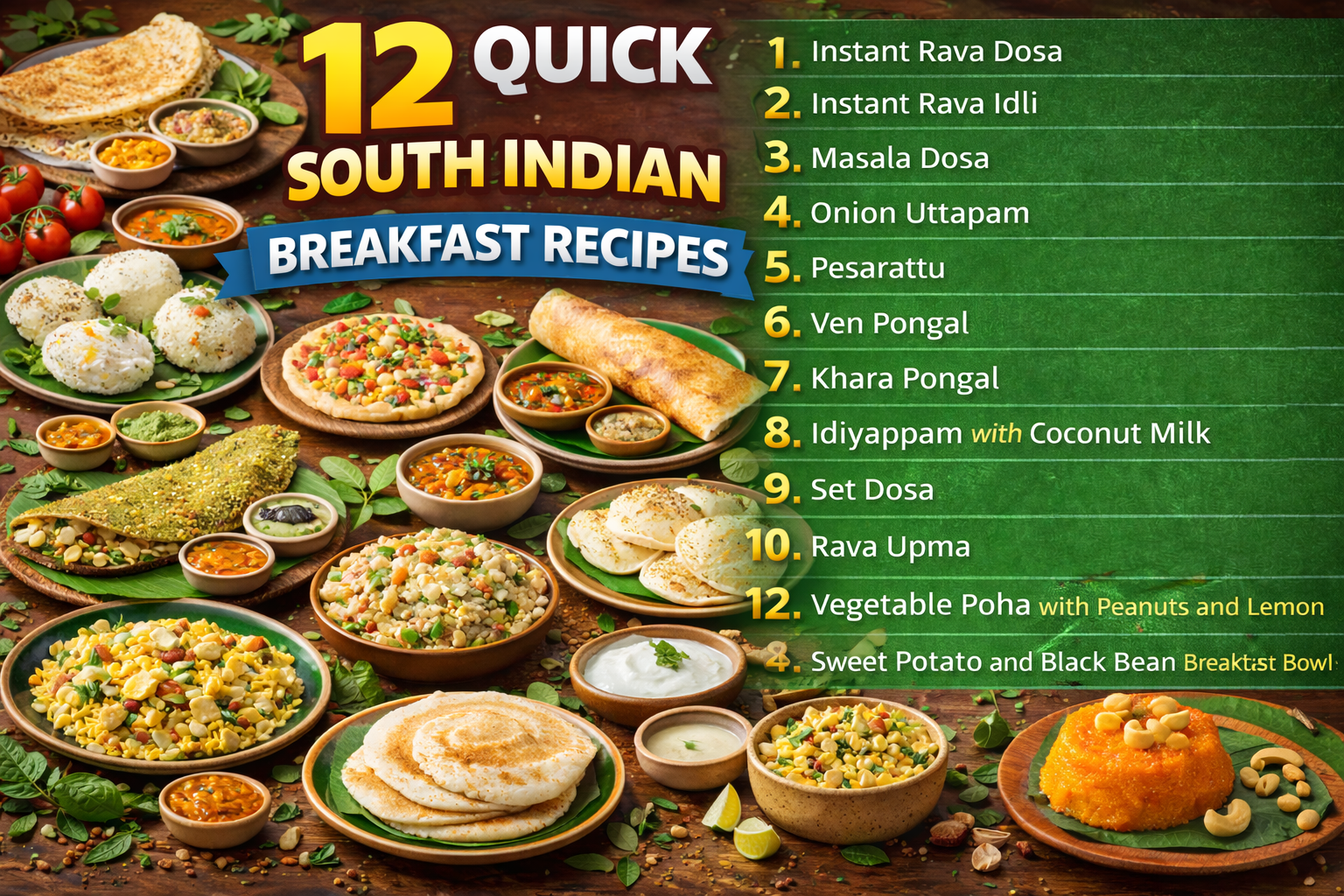
12 Quick South Indian Breakfast Recipes : The breakfast traditions of South India represent one of the world’s great culinary heritages. Across the four states of Tamil Nadu, Karnataka, Kerala, and Andhra Pradesh-Telangana, morning meals have evolved over centuries into a sophisticated repertoire of dishes built on fermented batters, steamed cakes, crispy crepes, and spiced lentil preparations. These are foods designed to satisfy deeply while remaining light enough for the tropical climate, nourishing enough for a hard day’s work, and complex enough to never become boring.
The common perception that South Indian breakfasts require elaborate preparation and hours of fermentation is only partially true. While traditional methods do call for overnight fermentation, modern adaptations and smart techniques have made these dishes accessible for busy mornings without sacrificing authenticity. The recipes that follow range from instant versions that come together in minutes to traditional preparations that can be streamlined with a little advance planning.
Each recipe captures something essential about South Indian cooking: the importance of tempering, the balance of textures, the interplay of spicy, tangy, and cooling elements. From the iconic crispness of dosa to the soft comfort of idli, from the hearty satisfaction of upma to the festive richness of pongal, these twelve recipes will transform your understanding of what a quick, nourishing breakfast can be.
Read More : 10 High-Protein Breakfast Ideas to Start Your Day,
12 Easy Breakfast Recipes Without Eggs,
5 No-Cook Breakfast Ideas for Office Days,
10 Simple Paratha Recipes for Morning Rush
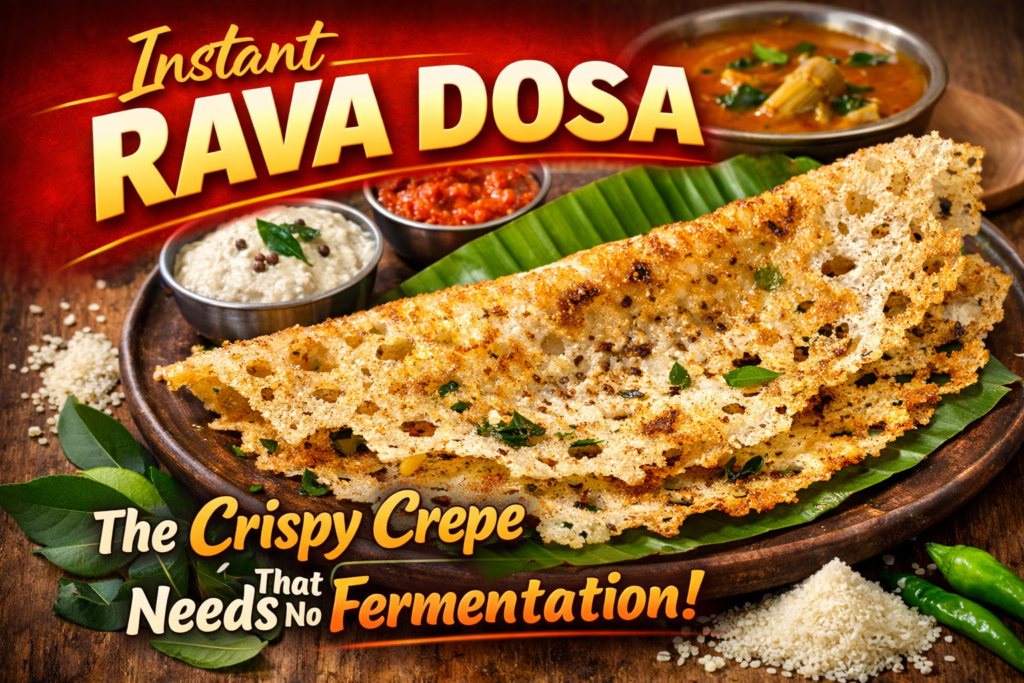
1. Instant Rava Dosa: The Crispy Crepe That Needs No Fermentation
Rava dosa occupies a special place in the South Indian breakfast repertoire. Unlike its traditional counterpart, which requires overnight fermentation of rice and urad dal, rava dosa uses semolina (rava or sooji) as its base and can be prepared instantly. The result is a dosa with a distinctive lacy, crispy texture that many actually prefer to the traditional version .
The batter comes together in minutes. In a large bowl, combine one cup of fine semolina with half a cup of rice flour and a quarter cup of all-purpose flour. The rice flour contributes to the characteristic crispness, while the all-purpose flour provides structure. Add half a cup of sour yogurt or buttermilk—the slight acidity helps create the signature lacy holes. Add finely chopped onions, green chilies, curry leaves, and a generous amount of cumin seeds. Salt to taste. Thin the batter with water until it reaches a pouring consistency—it should be significantly thinner than regular dosa batter, almost runny .
The key to perfect rava dosa lies in the cooking technique. Heat a non-stick tawa or pan until very hot—a drop of water should sizzle and evaporate immediately. Reduce the heat to medium and pour a ladleful of batter from the edges inward, moving quickly to create a lacy pattern. Do not spread the batter with the ladle; let it flow naturally. The holes that form are desirable, creating extra-crispy edges .
Drizzle a little oil or ghee around the edges and over the surface. Cook until the bottom is golden brown and crisp, then carefully flip and cook the other side briefly. The dosa should be thin, crisp, and deeply golden. Serve immediately with coconut chutney and sambar. The entire process, from batter to plate, takes about twenty minutes, making this the perfect solution for unexpected guests or mornings when you crave dosa without advance planning.
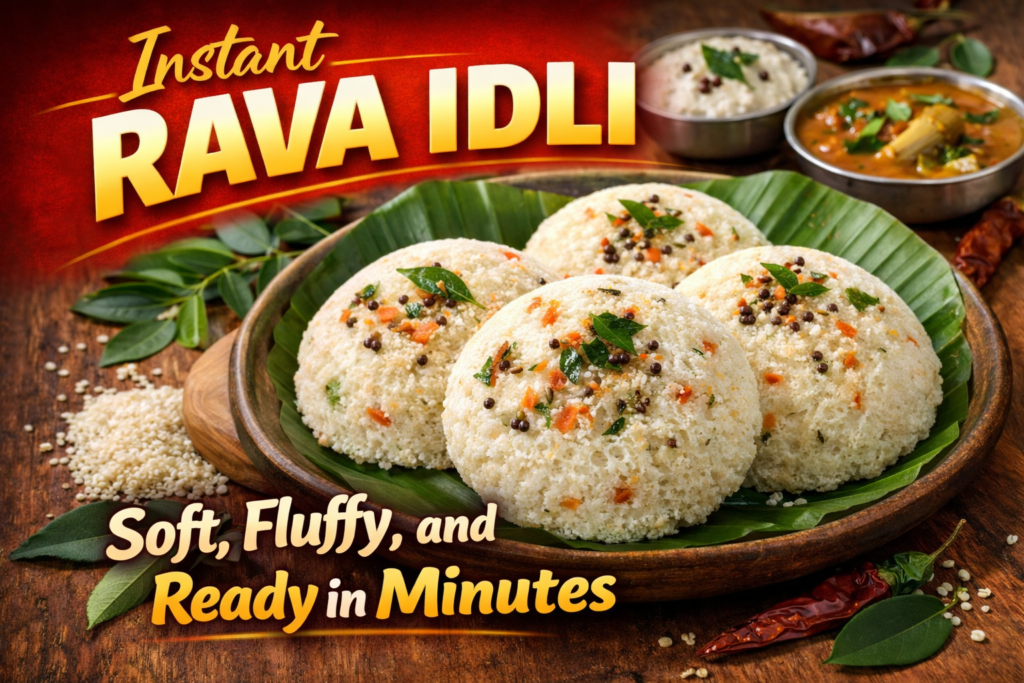
2. Instant Rava Idli: Soft, Fluffy, and Ready in Minutes
Idli, those soft, steamed rice cakes, are arguably the most famous South Indian breakfast food. The traditional version requires soaking rice and urad dal, grinding to a smooth batter, and fermenting overnight—a process that rewards patience with unparalleled texture and flavor. But for busy mornings, instant rava idli offers a remarkably good alternative that comes together in the time it takes to heat the steamer .
The key to successful rava idli lies in the tempering and the addition of fruit salt. Begin by dry roasting one cup of coarse semolina (rava) in a pan until it becomes fragrant and just begins to change color. This step is crucial—it removes the raw taste and ensures the idlis will have the right texture. Remove from the pan and set aside .
In the same pan, heat a tablespoon of oil or ghee. Add mustard seeds and let them splutter. Add urad dal and chana dal, sautéing until they begin to color. Add curry leaves, chopped green chilies, grated ginger, and chopped cashews if desired. Sauté until the cashews are golden. Add this tempering to the roasted rava, along with salt and half a cup of sour yogurt. Mix well, then add water gradually to form a thick batter—thicker than dosa batter but thinner than dough. Let the batter rest for fifteen to twenty minutes .
Just before steaming, add fruit salt (such as Eno) and a teaspoon of water to activate it. Stir gently—the batter will bubble and become frothy. Immediately pour the batter into greased idli molds and steam for ten to twelve minutes. A toothpick inserted into the center should come out clean. Let the idlis rest for a few minutes before unmolding. Serve with coconut chutney and sambar, or simply with a drizzle of ghee and a sprinkle of idli podi (spiced lentil powder). These idlis are remarkably light and fluffy, capturing much of what makes traditional idlis so beloved .

3. Masala Dosa: The King of South Indian Breakfasts
Masala dosa is the dish that introduced South Indian cuisine to the world. A thin, crisp crepe wrapped around a spiced potato filling, served with coconut chutney and sambar—it’s a complete meal that satisfies on every level. While traditional preparation requires fermented batter, using store-bought batter or batter prepared in advance makes this achievable on any morning .
For the potato filling, boil three or four potatoes until tender. While they cook, heat oil in a pan and add mustard seeds. When they splutter, add urad dal, chana dal, curry leaves, and chopped green chilies. Add finely chopped onions and sauté until translucent. Add turmeric powder and salt. Mash the boiled potatoes coarsely and add to the pan, mixing well with the tempering. Add water if needed to achieve a moist but not wet consistency. Garnish with fresh coriander and a squeeze of lemon juice. The filling can be made in advance and reheated .
For the dosa, heat a non-stick tawa until very hot. Reduce the heat to medium and pour a ladleful of batter in the center. Using the back of the ladle, spread the batter in circular motions to form a thin, even circle. Drizzle oil or ghee around the edges and over the surface. Cook until the bottom is golden and crisp, and the edges begin to lift from the pan .
Place a portion of the potato filling in the center of the dosa, fold the sides over, and roll or fold as desired. Serve immediately with coconut chutney and sambar. The contrast between the crisp dosa and the soft, spiced potato filling is what makes this dish legendary. With prepared batter and filling, this iconic breakfast can be on your table in under twenty minutes.
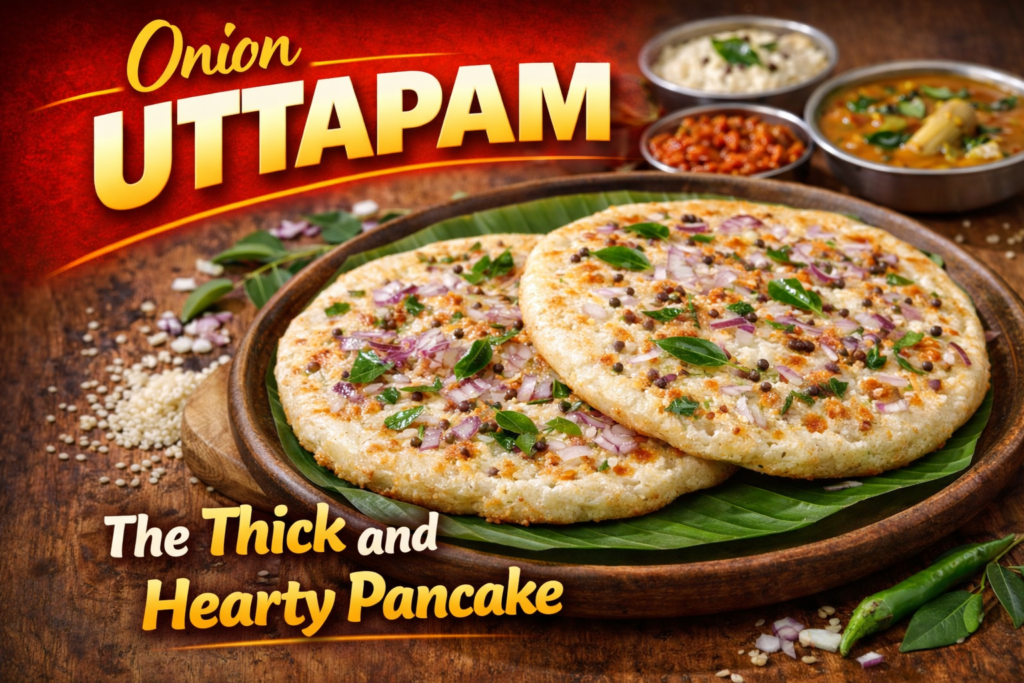
4. Onion Uttapam: The Thick and Hearty Pancake
Uttapam is often described as the South Indian pizza—a thick pancake made from dosa batter and topped with vegetables. Unlike the thin, crisp dosa, uttapam is soft, thick, and studded with toppings that become embedded in the batter as it cooks. It’s more substantial than dosa and arguably even more satisfying .
The batter is the same as dosa batter, whether homemade, fermented, or store-bought. The key difference lies in consistency and cooking method. Uttapam batter should be slightly thicker than dosa batter, allowing it to spread into a thick circle without running too thin .
Heat a tawa or non-stick pan and grease it lightly. Pour a ladleful of batter and spread it gently into a thick circle—about a quarter-inch thick. Immediately sprinkle finely chopped onions over the surface, pressing them gently into the batter. Add chopped green chilies, coriander, and if desired, chopped tomatoes. Drizzle oil or ghee around the edges and over the surface .
Cook on medium heat until the bottom is golden brown and crisp. This takes longer than dosa—about four to five minutes. Carefully flip the uttapam and cook the other side until golden. The finished uttapam should be crisp on the outside, soft within, and studded with caramelized onions and vegetables .
Serve with coconut chutney and sambar. Uttapam is particularly forgiving for beginners—it doesn’t require the thin, even spreading that dosa demands, and the toppings hide any imperfections in the shape. It’s also endlessly customizable; any vegetable can be used, from bell peppers to tomatoes to grated carrots.
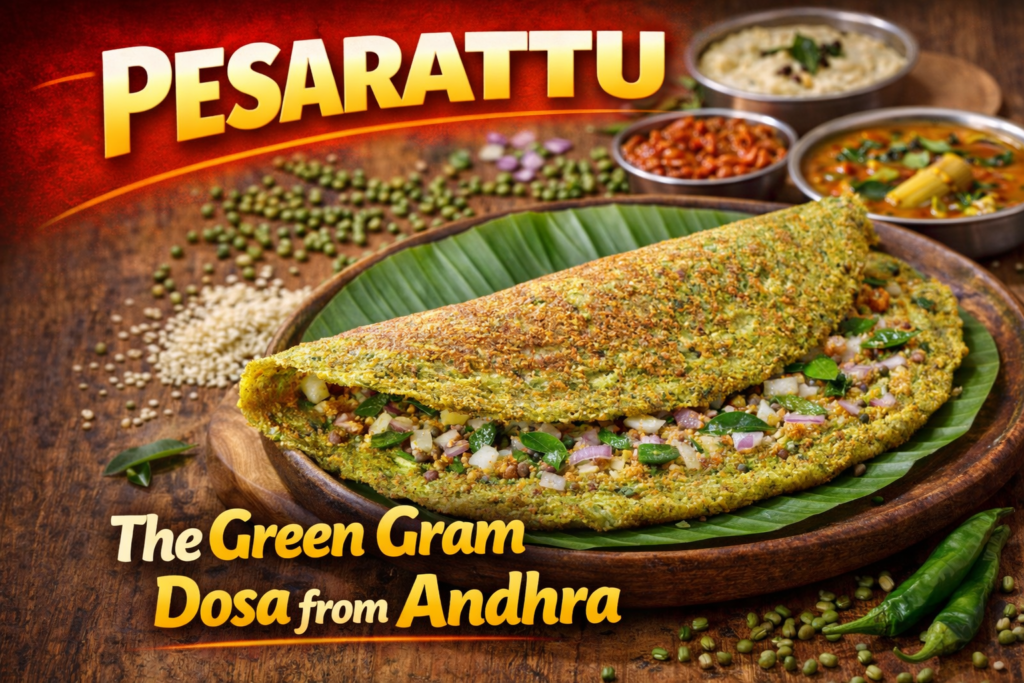
5. Pesarattu: The Green Gram Dosa from Andhra
Pesarattu, the green gram dosa from Andhra Pradesh, represents a different approach to the dosa family. Made from whole moong dal (green gram) rather than the traditional rice and urad dal combination, it’s higher in protein, naturally gluten-free, and has a distinctive green color and earthy flavor .
The preparation requires some advance planning but minimal morning effort. Soak one cup of whole moong dal overnight or for at least six hours. In the morning, drain the dal and transfer to a blender. Add a one-inch piece of ginger, two green chilies, and a pinch of salt. Grind to a smooth batter, adding water as needed to achieve a pouring consistency similar to regular dosa batter. The batter should be smooth but not too thin .
Pesarattu does not require fermentation, though a brief rest of fifteen to thirty minutes improves the texture. When ready to cook, heat a tawa and pour a ladleful of batter, spreading it in circular motions to form a thin dosa. The technique is identical to regular dosa, though pesarattu is typically thicker and less crisp. Drizzle oil around the edges and cook until golden on one side, then flip and cook briefly on the other .
Pesarattu is traditionally served with ginger chutney and sometimes filled with a spiced onion mixture similar to masala dosa. For the classic “upma pesarattu,” a small portion of thin upma is placed in the center before folding. The combination of the protein-rich dosa with the spiced upma creates a breakfast that keeps you full for hours. This is health food that doesn’t taste like health food—nutritious, delicious, and deeply satisfying.
6. Appam with Vegetable Stew: The Kerala Classic
Appam, also known as hoppers, are lacelike fermented pancakes from Kerala. Made from a batter of rice and coconut, they have a unique structure—thick and soft in the center, thin and crisp at the edges. Paired with vegetable stew, a coconut milk-based curry with vegetables, they create one of the most elegant breakfasts in the Indian repertoire .
The appam batter requires fermentation, so this is a weekend breakfast or one you plan ahead for. Soak two cups of raw rice for at least four hours. Drain and grind with cooked rice, grated coconut, a little cooked rice, and salt to form a smooth batter. Add yeast or a little fermented batter from a previous batch to aid fermentation. Let it ferment overnight or for at least eight hours .
In the morning, the batter should be bubbly and slightly sour. Thin it with water to a pouring consistency—slightly thinner than dosa batter. Heat an appam chatti or a small non-stick wok. When hot, reduce the heat to medium and pour a ladleful of batter into the center. Immediately swirl the pan to spread the batter up the sides, creating the characteristic thin edges. Cover and cook for two to three minutes until the edges are crisp and the center is cooked through. The appam should be soft and white in the center, lacy and golden at the edges .
While the appams cook, prepare the stew. In a pan, heat coconut oil and add curry leaves, cinnamon, cardamom, and cloves. Add finely chopped onions and ginger-garlic paste, sautéing until soft. Add mixed vegetables—carrots, beans, peas, potatoes—and sauté briefly. Add water and salt, and cook until the vegetables are tender. Add thick coconut milk and simmer gently—do not boil after adding coconut milk, or it may curdle. Finish with a little thin coconut milk if needed .
Serve the appams warm, with the vegetable stew ladled over or alongside. The combination of the slightly sour, soft appam with the creamy, aromatic stew is nothing short of sublime. This is South Indian breakfast at its most refined.
7. Ven Pongal: The Comfort Food of Tamil Nadu
Ven pongal is the ultimate South Indian comfort food—a savory porridge of rice and moong dal, tempered with black pepper, cumin, ginger, and curry leaves, and enriched with ghee and cashews. It’s simple, nourishing, and deeply satisfying, particularly on cool mornings or when you need something warm and soothing .
The preparation is straightforward. In a pressure cooker or heavy pot, combine half a cup of rice and a quarter cup of moong dal. Wash thoroughly, then add three cups of water and a pinch of turmeric. Pressure cook for three to four whistles, or cook in an open pot until the rice and dal are very soft and almost mushy. Mash lightly with a wooden spoon to achieve a porridge-like consistency .
While the rice and dal cook, prepare the tempering. In a small pan, heat generous amounts of ghee—this is not the time to skimp. Add whole black peppercorns, cumin seeds, cashews, and ginger cut into fine juliennes. Sauté until the cashews are golden and the spices are fragrant. Add curry leaves and let them crackle .
Pour the tempering into the cooked rice and dal mixture, along with salt to taste. Stir well, adding more hot water if needed to achieve your desired consistency. The pongal should be soft and porridge-like, not stiff. Serve hot, with a drizzle of additional ghee on top and accompanied by coconut chutney and sambar .
The beauty of ven pongal lies in its simplicity. The combination of rice and dal provides complete protein, the ghee adds richness and aids digestion, and the pepper and ginger provide warmth and are traditionally believed to have medicinal properties. It’s food that heals as it nourishes.
8. Khara Pongal: The Spiced Cousin
Khara pongal, also known as spicy pongal, is a variation on the theme that adds vegetables and more intense spicing to the basic rice and dal preparation. It’s heartier than ven pongal, more substantial, and can serve as a complete meal in itself .
Begin by cooking rice and moong dal as for ven pongal—soft and slightly mushy. While they cook, prepare the vegetables. Finely chop carrots, beans, peas, and any other vegetables you have. In a pan, heat oil or ghee and add mustard seeds. When they splutter, add cumin seeds, curry leaves, and chopped green chilies. Add finely chopped onions and sauté until soft. Add the vegetables and sauté for a few minutes, then add a little water and cook until tender .
Combine the cooked rice and dal with the vegetable mixture. Add salt and a generous amount of freshly cracked black pepper. Some versions add a little red chili powder for additional heat. Mix well, adding hot water if needed to achieve a porridge-like consistency. Finish with a tempering of ghee, cashews, and curry leaves poured over the top .
Serve hot, with coconut chutney on the side. Khara pongal is more substantial than ven pongal, making it ideal for days when you need extra energy. The vegetables add nutrition and texture, transforming a simple porridge into a complete meal.
9. Idiyappam with Coconut Milk: The String Hoppers
Idiyappam, also known as string hoppers or nool puttu, are delicate nests of rice noodles, steamed to perfection. They are light, elegant, and pair beautifully with a variety of accompaniments—sweet coconut milk, spicy curries, or simply a sprinkle of sugar and grated coconut .
Making idiyappam requires a special tool called an idiyappam press, but the preparation is otherwise simple. Bring water to a boil with a little salt and a teaspoon of oil. Add rice flour gradually, stirring continuously, until the mixture forms a dough. Cover and let it rest for five minutes. While still warm, knead the dough until smooth—it should be pliable and not too dry .
Fill the idiyappam press with the dough and press it directly onto idli plates or a steamer basket, forming circular nests. Steam for five to seven minutes until the noodles are cooked through and slightly translucent. The finished idiyappam should be soft, separate strands that pull apart easily .
Serve with sweet coconut milk—fresh coconut milk sweetened with jaggery or sugar and flavored with cardamom. For a savory version, serve with egg curry, vegetable stew, or simply with a drizzle of coconut oil and a sprinkle of grated coconut. Idiyappam is also excellent with ripe bananas and a little sugar, a combination that children particularly love. The versatility of this dish makes it a breakfast that never becomes boring.
10. Set Dosa: The Soft, Spongy Crepe
Set dosa, also known as benne dosa in Karnataka, is a softer, spongier cousin of the classic dosa. These small, thick dosas are served in sets of two or three—hence the name—with coconut chutney and sambar. They are particularly popular in Bangalore, where they achieve almost cult status .
The batter for set dosa is similar to regular dosa batter but slightly thicker and enriched with a little cooked rice or poha, which contributes to the soft texture. If using regular dosa batter, add a handful of cooked rice or soaked poha and grind briefly to incorporate. The batter should be thick enough to spread into a small, thick circle without running too thin .
Heat a tawa and grease it lightly. Pour a ladleful of batter in the center and spread it gently into a thick circle—about five to six inches in diameter. The dosa should be significantly thicker than regular dosa. Drizzle oil or ghee around the edges and over the surface. Cook on medium heat until the bottom is golden brown and the top surface is dotted with small holes .
Unlike regular dosa, set dosa is typically cooked on one side only. The top should be soft and spongy while the bottom is crisp. Fold the dosa in half and serve immediately, with generous amounts of butter melting over the top if you’re following the Bangalore tradition. Set dosa with butter, coconut chutney, and sambar is a breakfast worth traveling for.
11. Rava Upma: The South Indian Breakfast Staple
Upma is the workhorse of South Indian breakfasts—simple, satisfying, and endlessly adaptable. Made from roasted semolina tempered with spices and vegetables, it comes together in minutes and can be varied endlessly based on what you have available .
The secret to perfect upma lies in the roasting of the semolina and the ratio of liquid to grain. Dry roast one cup of fine semolina (rava) in a pan over medium heat, stirring constantly, until it becomes fragrant and just begins to change color. This takes about three to four minutes and is absolutely crucial—insufficient roasting leaves the upma with a raw, pasty taste. Remove from the pan and set aside .
In the same pan, heat oil or ghee. Add mustard seeds and let them splutter. Add urad dal and chana dal if available, sautéing until they begin to color. Add curry leaves, chopped green chilies, and grated ginger. Add finely chopped onions and sauté until soft. Now add any vegetables you have—finely chopped carrot, peas, beans, or bell peppers all work. Sauté for two minutes .
Add two and a half cups of water and salt to taste. Bring to a rolling boil. Reduce the heat to low and slowly add the roasted semolina in a thin stream, stirring continuously with your other hand to prevent lumps from forming. This simultaneous addition and stirring is the technique that separates perfect upma from lumpy disappointment .
Stir until all the water is absorbed and the upma comes together into a cohesive mass—about two to three minutes. Cover the pan and let it rest on low heat for another two minutes. Turn off the heat and let it rest for five minutes before serving. Fluff with a fork, garnish with fresh coriander and a squeeze of lemon, and serve with coconut chutney. Upma is breakfast that fuels a morning’s work without weighing you down.
12. Rava Kesari: The Sweet Breakfast Treat
While South Indian breakfasts are predominantly savory, rava kesari provides a sweet option that’s perfect for festivals, Sundays, or mornings when you crave something indulgent. This semolina halwa, colored bright yellow-orange with saffron or food color and enriched with ghee and nuts, is simplicity itself .
In a heavy pan, heat generous amounts of ghee—kesari is not for those counting calories. Add half a cup of fine semolina and roast on low heat, stirring constantly, until it becomes fragrant and golden. The roasting is crucial; under-roasted kesari tastes raw, while over-roasted becomes bitter .
While the semolina roasts, bring one and a quarter cups of water to a boil in a separate pot. Add sugar—about three-quarters of a cup, though you can adjust to taste—and stir until dissolved. If using saffron, add it to the hot water to release its color and aroma. If using food color, add it now .
When the semolina is perfectly roasted, slowly pour the hot sugar water into it while stirring continuously. The mixture will bubble and steam vigorously—stand back to avoid splatters. Stir until all the liquid is absorbed and the mixture thickens into a cohesive mass. Add more ghee, along with cashews and raisins that have been fried in ghee until golden. Stir well .
Cover and let it rest on low heat for two to three minutes. The finished kesari should be soft, moist, and brightly colored. Serve warm, garnished with additional nuts. Rava kesari is traditionally offered as prasad in temples and made for special occasions, but there’s no reason you can’t enjoy it on an ordinary morning when you need something sweet to start your day.
| Breakfast Recipe | Key Ingredients | Prep Time | Fermentation Required | Distinctive Feature |
|---|---|---|---|---|
| Instant Rava Dosa | Semolina, rice flour, onions, spices | 20 mins | None | Lacy, crispy texture; instant batter |
| Instant Rava Idli | Semolina, yogurt, fruit salt, tempering | 25 mins | None (rest 15 mins) | Soft, fluffy; uses fruit salt for leavening |
| Masala Dosa | Dosa batter, potatoes, onions, spices | 20 mins (with prepared batter) | Yes (traditional) | Iconic; crisp crepe with spiced potato filling |
| Onion Uttapam | Dosa batter, onions, green chilies | 20 mins | Yes (traditional) | Thick pancake; vegetables embedded in batter |
| Pesarattu | Whole moong dal, ginger, green chilies | 25 mins (plus soaking) | None | High-protein; green color; Andhra specialty |
| Appam with Vegetable Stew | Rice, coconut, vegetables, coconut milk | 45 mins (with fermented batter) | Yes | Lacelike edges; Kerala specialty |
| Ven Pongal | Rice, moong dal, pepper, cumin, ghee | 25 mins | None | Savory porridge; ultimate comfort food |
| Khara Pongal | Rice, moong dal, mixed vegetables, spices | 30 mins | None | Spiced version; more substantial |
| Idiyappam | Rice flour, water, salt | 30 mins | None | Rice noodles; served with coconut milk |
| Set Dosa | Dosa batter, cooked rice or poha | 20 mins | Yes | Soft, spongy; served with butter |
| Rava Upma | Semolina, vegetables, tempering spices | 20 mins | None | Quick staple; endlessly adaptable |
| Rava Kesari | Semolina, sugar, ghee, nuts, saffron | 20 mins | None | Sweet semolina halwa; festive treat |
The South Indian Breakfast Philosophy
Understanding South Indian breakfasts requires appreciating the philosophy behind them. These are meals designed for a tropical climate—light enough to not weigh you down in the heat, yet nourishing enough to fuel a morning’s work. They rely on fermentation, which not only adds flavor but also increases nutrient bioavailability and introduces beneficial probiotics that support digestive health .
The prominence of rice and lentils provides complete protein when combined, while the generous use of spices like black pepper, cumin, and ginger aids digestion and adds warmth without heat. Coconut appears in countless forms—as chutney, in stews, as grated garnish—providing healthy fats that contribute to satiety. The tempering technique, with its spluttering mustard seeds and fragrant curry leaves, transforms simple ingredients into something complex and satisfying .
These breakfasts also demonstrate remarkable resourcefulness. Leftover rice becomes the basis for fermented batters. Overripe bananas find their way into sweet preparations. Yesterday’s dosa batter becomes today’s uttapam. Nothing is wasted, everything is transformed. This is cooking that respects ingredients while extracting maximum pleasure from them.
Practical Tips for South Indian Breakfast Success
For those new to South Indian cooking, a few practical tips can smooth the path. First, invest in a good non-stick tawa or pan—it makes dosa-making infinitely easier. Second, keep your pantry stocked with essentials: rice, urad dal, semolina, mustard seeds, curry leaves (which freeze well), asafoetida, and coconut. With these staples, you can make most South Indian breakfasts on short notice .
Third, embrace advance preparation. A batch of dosa batter made on the weekend provides breakfast for days. Idli batter can be refrigerated for up to a week. Coconut chutney keeps for several days and freezes well. Having these components ready transforms morning cooking from production to assembly .
Fourth, don’t fear failure. The first dosa is almost always a disaster—too thick, too thin, torn, stuck. This is normal. Make it anyway, eat it anyway, and try again. By the third or fourth dosa, you’ll have found your rhythm. By the tenth, you’ll be spreading batter like a pro.
Conclusion
The breakfast traditions of South India represent one of the world’s great culinary achievements—a repertoire of dishes that are simultaneously simple and complex, nourishing and delicious, traditional and adaptable. These twelve recipes capture the breadth of that tradition, from the instant convenience of rava dosa to the fermented perfection of traditional appam, from the comforting simplicity of upma to the festive sweetness of kesari.
Each recipe offers a window into a different aspect of South Indian food culture. Together, they demonstrate that South Indian breakfast need not be a weekend project requiring hours of preparation. With smart techniques, quality ingredients, and a little practice, these dishes can become part of your regular morning rotation, bringing the flavors of Tamil Nadu, Kerala, Karnataka, and Andhra to your table any day of the week.
Start with one that appeals to you. Master it, make it your own, then move to another. Before long, you’ll have a repertoire of South Indian breakfasts that you can make without thinking, dishes that will sustain you through the busiest mornings and delight you on the laziest weekends. That is the gift of this cuisine—it rewards effort with pleasure, and practice with mastery. Your mornings will never be the same.
5 thoughts on “12 Quick South Indian Breakfast Recipes”