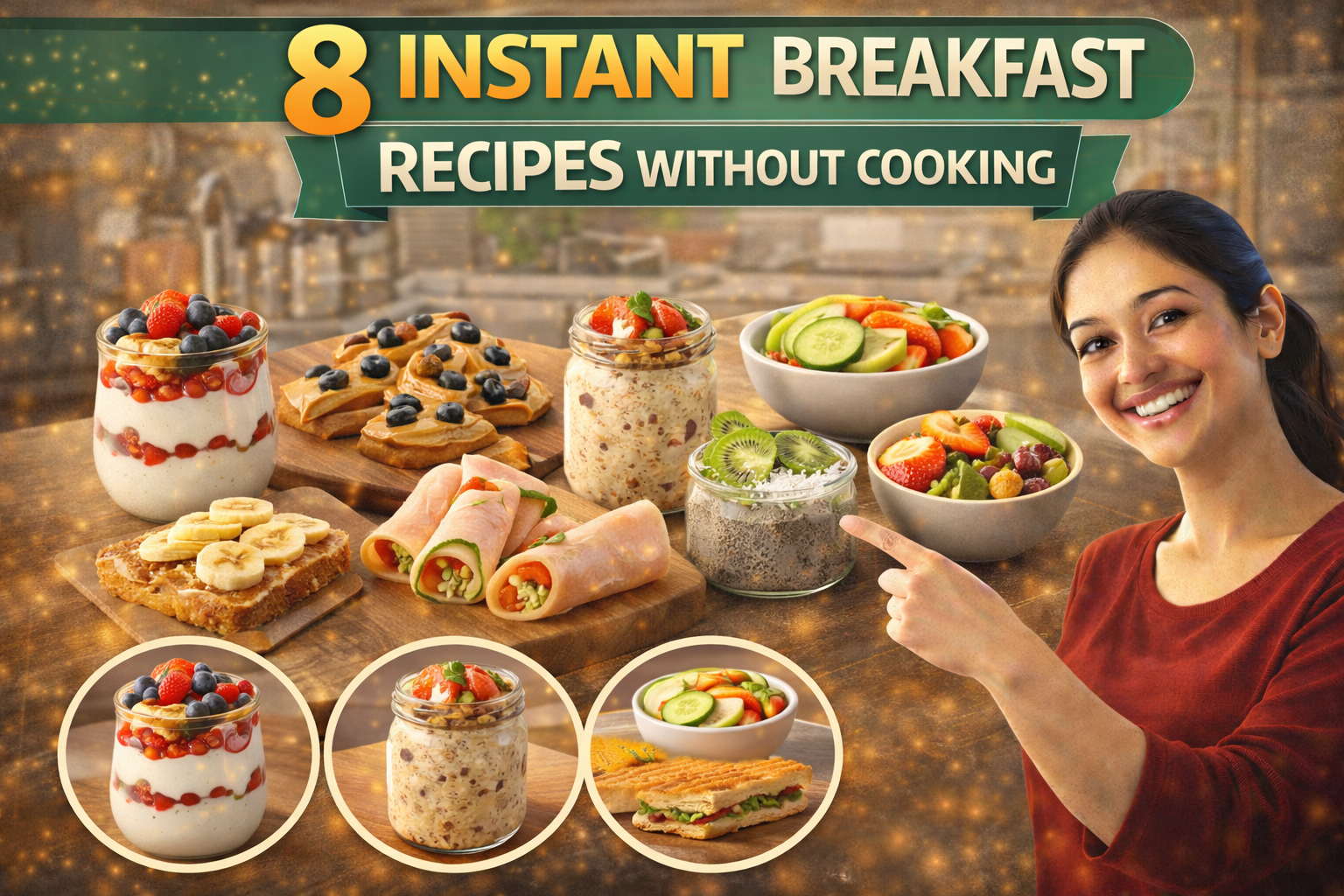
8 Instant Breakfast Recipes Without Cooking : There are mornings when even the thought of turning on the stove feels like too much. Perhaps you’re running late, perhaps you’re exhausted, perhaps you’re staying somewhere without kitchen access, or perhaps you simply want to minimize the time between waking and walking out the door. Whatever the reason, the assumption that a proper breakfast requires cooking is one that deserves examination.
Across cultures and culinary traditions, there exist countless ways to assemble a nourishing, satisfying breakfast using nothing more than ingredients that require no heat. These are not compromises or sad approximations of real food. They are complete meals in their own right, designed to be assembled in minutes, eaten with minimal fuss, and provide the energy and nutrients your body needs to face the day ahead.
The recipes that follow require exactly zero cooking. No stove, no microwave, no oven, no induction cooktop. If you have a refrigerator, a knife, and a bowl, you have everything you need to make these breakfasts. They draw on pantry staples that keep indefinitely, fresh ingredients that require minimal preparation, and clever combinations that transform simple components into something greater than the sum of their parts. From the five-minute assembly of a yogurt parfait to the make-ahead convenience of overnight oats, these eight instant breakfasts will ensure that no morning is ever too rushed for a proper meal.
Read More : 8 Healthy Breakfast Recipes for Weight Loss Diet
10 Traditional Indian Breakfasts You Can Make Fast
10 High-Protein Breakfast Ideas to Start Your Day
12 Easy Breakfast Recipes Without Eggs
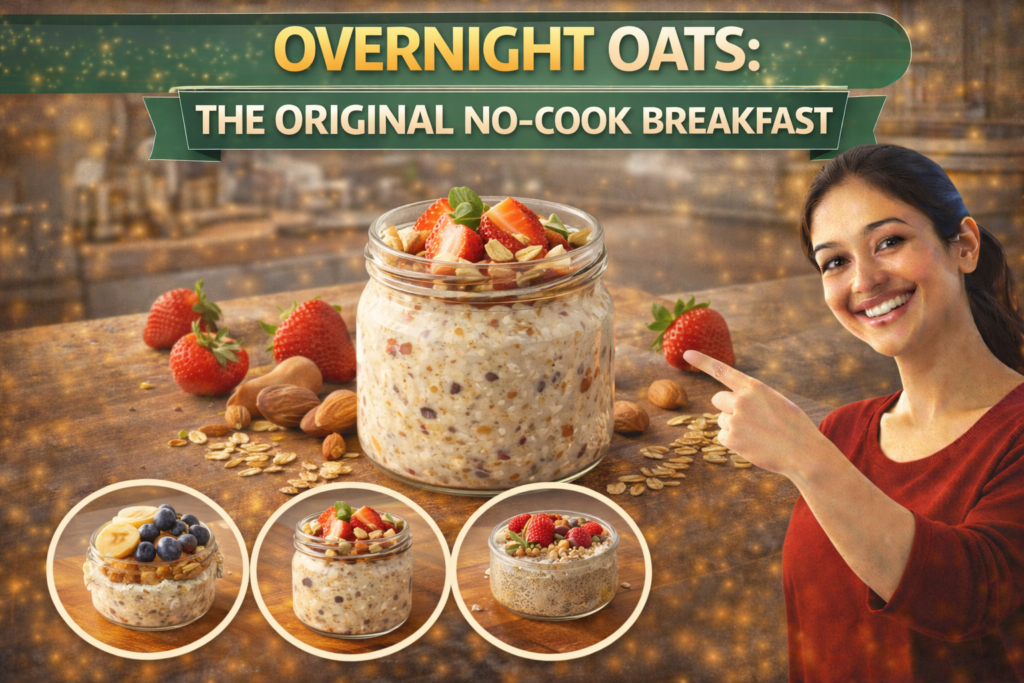
1. Overnight Oats: The Original No-Cook Breakfast
Overnight oats have earned their reputation as the ultimate no-cook breakfast for good reason. This method requires exactly five minutes of effort—and that effort happens the night before, when you’re likely already in the kitchen and have time to spare. By morning, a transformation has occurred: the raw oats have softened, the flavors have melded, and a ready-to-eat breakfast awaits you in the refrigerator .
The science behind this transformation is simple but fascinating. Rolled oats contain starches that, when exposed to liquid over time, absorb moisture and soften without requiring heat. This slow hydration process breaks down the oats’ cellular structure more gently than cooking would, potentially preserving more of their nutritional integrity while creating a pleasantly chewy texture that many find preferable to cooked oatmeal .
To make the basic version, combine half a cup of rolled oats with half a cup of milk in a jar or bowl. Any milk works—dairy, soy, almond, oat, coconut. Add a tablespoon of chia seeds if you have them; they’re optional but transformative, creating a pudding-like texture while contributing protein, fiber, and omega-3 fatty acids. A drizzle of honey or maple syrup adds sweetness, and a pinch of salt enhances all the flavors. Stir everything together thoroughly, ensuring the chia seeds are well distributed so they don’t clump. Cover and refrigerate overnight .
In the morning, the mixture will have thickened into a creamy, ready-to-eat breakfast. Top it with whatever appeals to you—sliced banana, fresh berries, a spoonful of peanut butter, chopped nuts, or simply eat it as is. The variations are endless, which means overnight oats never become boring. For variety, try adding cocoa powder for a chocolate version, mashed banana for natural sweetness, or a spoonful of your favorite jam for fruity flavor. The jar itself becomes your breakfast bowl and can be eaten from directly, eliminating dishes entirely.
2. Yogurt and Fruit Parfait: Layers of Goodness
A yogurt parfait sounds like something you’d order at a trendy café, but it’s actually one of the simplest no-cook breakfasts you can assemble. In the time it takes to decide what to eat, you can have a beautifully layered breakfast that looks impressive while requiring minimal effort .
The construction is straightforward. Choose a glass or a bowl—a clear container shows off the layers, making the breakfast feel special, but any vessel works. Begin with a layer of yogurt at the bottom. Greek yogurt is ideal if available, as it contains significantly more protein than regular yogurt, keeping you full longer. Plain yogurt allows you to control sweetness, but vanilla yogurt works if that’s what you have .
Top the yogurt with a layer of fruit. Fresh berries are lovely when in season, but sliced banana, chopped apple, diced mango, or even drained canned fruit in juice all work beautifully. The fruit provides vitamins, fiber, and natural sweetness. If you have granola or any breakfast cereal, sprinkle a layer over the fruit. The granola adds crunch and complex carbohydrates. Repeat the layers until you reach the top of your container, finishing with a flourish of fruit and a sprinkle of granola for presentation .
The beauty of this breakfast lies in its flexibility. The yogurt provides protein and calcium. The fruit adds nutrients and sweetness. The granola contributes texture and energy. Together, they create a breakfast that feels indulgent while being genuinely nutritious. For extra staying power, add a tablespoon of nuts or seeds between the layers. For sweetness without added sugar, choose very ripe fruit. For a savory twist that few have tried, top with a sprinkle of chaat masala—the combination of yogurt, fruit, and spice is surprisingly compelling.
3. Peanut Butter Banana Toast: The Three-Ingredient Classic
This combination has sustained people through rushed mornings for generations, and its enduring popularity is well-deserved. It requires no cooking, uses ingredients that keep indefinitely, and delivers a surprisingly balanced nutritional profile in the time it takes to toast bread .
The quality of your toast matters, even though toasting is technically a form of cooking. Most toasters require no more effort than pushing a lever, and the result is worth the minimal wait. Use whole grain bread if possible—it digests more slowly than white bread, providing sustained energy rather than a quick spike followed by a crash. Toast it until it’s deeply golden and crisp; the texture contrast between crunchy toast, creamy peanut butter, and soft banana is part of the pleasure .
Spread a generous layer of peanut butter on the warm toast while it’s still hot. The heat will soften the peanut butter slightly, making it easier to spread and more luxurious on the tongue. Natural peanut butter that separates requires stirring before use, but the flavor is worth the small effort. Slice a banana thinly and arrange the rounds across the peanut butter, covering the toast completely .
For variations that keep this breakfast interesting, consider these additions: a drizzle of honey adds sweetness and has antimicrobial properties; a sprinkle of cinnamon adds warmth without calories and may help regulate blood sugar; a few dark chocolate chips transform this into something approaching dessert; a sprinkle of chia seeds adds texture and nutrition. The basic version, however, needs no embellishment to be satisfying. This breakfast takes exactly as long as your toaster requires, and it can be eaten with your hands while walking out the door—the ultimate convenience.
4. Chia Seed Pudding: The Make-Ahead Marvel
Chia seed pudding has become a staple of the health-conscious breakfast world, and for good reason. These tiny seeds possess a remarkable property: when soaked in liquid, they absorb up to twelve times their weight, forming a gel-like consistency that creates a pudding texture without any cooking whatsoever .
The nutritional profile of chia seeds is impressive enough to justify their inclusion in any breakfast. They contain significant amounts of fiber, protein, omega-3 fatty acids, and various micronutrients. When consumed, the gel they form in the stomach slows digestion and prolongs feelings of fullness, making chia pudding an excellent choice for those who need sustained energy through long mornings .
The basic recipe could not be simpler. In a jar or bowl, combine three tablespoons of chia seeds with one cup of milk. Any milk works—dairy, almond, coconut, oat. Add a drop of vanilla extract and a sweetener of your choice: honey, maple syrup, mashed ripe banana, or a few drops of stevia. Stir vigorously, wait five minutes, and stir again. This second stirring is crucial—chia seeds have a tendency to clump if not thoroughly distributed, and the brief wait allows them to begin absorbing liquid, making the second stirring more effective .
Cover and refrigerate overnight, or for at least four hours. In the morning, the mixture will have transformed into a thick, pudding-like consistency. Top it with fresh fruit, nuts, seeds, or simply eat it as is. For a tropical variation, use coconut milk and top with diced mango and toasted coconut flakes. For a chocolate version, stir in a tablespoon of cocoa powder before refrigerating. For a berry version, swirl in a spoonful of berry compote or mash fresh berries into the finished pudding. The possibilities are endless, and the effort is minimal.
5. Muesli with Milk or Yogurt: The Swiss Original
Muesli, invented by Swiss physician Maximilian Bircher-Brenner in the early twentieth century, was specifically designed as a health food that required no cooking. The original recipe called for oats soaked overnight in water and lemon juice, topped with grated apple, condensed milk, and nuts—a far cry from the boxed cereals that now bear its name .
True muesli, whether store-bought or homemade, consists of raw rolled oats mixed with dried fruits, nuts, and seeds. Unlike granola, it contains no added oil or sweetener and has not been baked, which means it retains all of its original nutritional integrity while requiring absolutely no preparation beyond soaking .
The simplest way to enjoy muesli is to combine it with milk or yogurt and let it sit for a few minutes while you gather your things. The liquid softens the oats slightly, creating a pleasant texture that is neither as soft as cooked oatmeal nor as crunchy as granola. For a more luxurious version, prepare it the night before like overnight oats, allowing the flavors to meld and the oats to soften completely .
To assemble, place half a cup of muesli in a bowl. Add half a cup of milk or a generous dollop of yogurt. If using milk, stir to combine and let it sit for five to ten minutes. If using yogurt, stirring is optional—you can simply top the yogurt with muesli and eat immediately, enjoying the contrast between creamy yogurt and crunchy muesli. Top with fresh fruit if desired, though the dried fruit in the muesli already provides sweetness. This breakfast takes exactly as long as it takes to pour milk into a bowl, making it one of the fastest options available.
6. Fresh Fruit Bowl with Nuts and Seeds
Sometimes the simplest breakfast is the best. A bowl of fresh fruit, topped with nuts and seeds, requires no preparation beyond washing and cutting, yet it delivers vitamins, minerals, fiber, and healthy fats in a naturally sweet package that satisfies without weighing you down .
The key to making this breakfast satisfying rather than skimpy is including enough variety and substance. A single apple, while healthy, will not keep you full for long. But a bowl containing multiple fruits, plus protein-rich nuts and fiber-rich seeds, becomes a complete meal that provides sustained energy .
Start with a base of whatever fruit is in season or on sale. Bananas provide potassium and natural sweetness. Apples add crunch and fiber. Berries contribute antioxidants and vibrant color. Oranges offer vitamin C and juicy brightness. Mango brings tropical sweetness when available. Chop larger fruits into bite-sized pieces and combine them in a bowl .
Now add the staying power. A handful of almonds adds protein, healthy fats, and vitamin E. Walnuts contribute omega-3 fatty acids. Pumpkin seeds provide magnesium and zinc. Chia seeds or flaxseeds add fiber and additional nutrients. A sprinkle of coconut flakes adds texture and a hint of sweetness. For extra protein, a dollop of yogurt on the side or drizzled over the fruit transforms this simple bowl into a more substantial meal .
The beauty of this breakfast lies in its adaptability. Use whatever fruit you have, whatever nuts are in your pantry, whatever seeds you remembered to buy. No recipe is required—just the simple pleasure of eating fruit in its natural state, enhanced by the crunch and richness of nuts and seeds. This breakfast takes about five minutes to prepare, most of which is spent washing and chopping fruit.
7. Smoothie Bowl: Breakfast You Eat with a Spoon
Smoothie bowls represent the intersection of convenience and creativity. They require a blender but no cooking, come together in minutes, and can be customized endlessly based on what you have available. Unlike drinking a smoothie, eating a smoothie bowl with a spoon feels more like a meal, encouraging slower eating and greater satisfaction .
The technique differs slightly from making a drinkable smoothie. For a bowl, you want a thicker consistency—thick enough to support toppings without them sinking. This is achieved by using less liquid and more frozen ingredients. Start with a base of frozen fruit—bananas, berries, mango, or any combination. Frozen fruit is essential for achieving the right texture without adding ice, which would dilute the flavor .
Add a liquid to facilitate blending. A quarter cup of milk, yogurt, or fruit juice is usually enough—start with less and add more only if needed. Add a scoop of protein powder if you use it, a tablespoon of nut butter for richness, or a spoonful of chia seeds for added nutrition. Blend until smooth, stopping to scrape down the sides as needed. The mixture should be thick enough to hold its shape when mounded in a bowl .
Pour the thick smoothie into a bowl and smooth the top. Now comes the creative part: toppings. Arrange sliced fruit, granola, coconut flakes, chia seeds, sliced almonds, or any combination that appeals to you. The toppings add texture and visual appeal, transforming a simple smoothie into an Instagram-worthy breakfast that tastes as good as it looks. Eat immediately with a spoon, savoring the contrast between the creamy base and the crunchy toppings. This breakfast takes about five minutes of active time, plus whatever time your blender requires.
8. Bread and Cheese with Fresh Vegetables: The Continental Plate
Before the era of elaborate breakfasts, there was bread and cheese. This combination has sustained humanity for millennia, and it remains one of the simplest, most satisfying no-cook breakfasts available. Paired with fresh vegetables, it becomes a complete meal that requires no preparation beyond slicing .
The quality of your ingredients matters more here than in any other recipe, because there are no spices or cooking techniques to mask mediocrity. Good bread—a crusty baguette, a hearty whole grain loaf, or even good quality sliced bread—forms the foundation. Good cheese—something with flavor, whether it’s sharp cheddar, creamy brie, tangy goat cheese, or familiar processed cheese—provides protein and richness. Fresh vegetables add crunch, vitamins, and color .
To assemble, slice your bread and arrange it on a plate. Slice your cheese and arrange it alongside or on top of the bread. Wash and slice vegetables—cucumber, tomato, bell pepper, radish, carrot—and arrange them attractively. If you have olives, pickles, or other preserved vegetables, add those as well. A handful of nuts or a piece of fruit completes the plate .
This breakfast requires no actual assembly beyond arranging items on a plate. It can be eaten with hands or with utensils, depending on the formality of your morning. It travels well if wrapped and taken to go. And it satisfies in a way that few other breakfasts can, combining the primal satisfaction of bread and cheese with the freshness of vegetables. For variety, add a spread—butter, cream cheese, hummus, or chutney—to elevate the bread. For extra protein, include a boiled egg if you have one prepared in advance. The continental plate adapts to whatever you have, making it the ultimate no-cook breakfast for those who keep a well-stocked refrigerator.
| Breakfast Recipe | Key Ingredients | Prep Time | Make-Ahead Potential | Why It Works Without Cooking |
|---|---|---|---|---|
| Overnight Oats | Rolled oats, milk, chia seeds, sweetener | 5 mins (night before) | High | Oats soften in liquid overnight; grab and eat |
| Yogurt Fruit Parfait | Yogurt, fresh fruit, granola | 3 mins | Medium | Layered assembly; no heat required |
| Peanut Butter Banana Toast | Bread, peanut butter, banana | 3 mins | Low | Toast is minimal cooking; assembly is instant |
| Chia Seed Pudding | Chia seeds, milk, sweetener, vanilla | 5 mins (night before) | High | Seeds form gel in liquid; no heat needed |
| Muesli with Milk/Yogurt | Muesli, milk or yogurt, fresh fruit | 2 mins | Medium | Oats soften in liquid; can be prepared instantly |
| Fresh Fruit Bowl | Seasonal fruits, nuts, seeds | 5 mins | Low | Simple chopping; no cooking whatsoever |
| Smoothie Bowl | Frozen fruit, milk/yogurt, toppings | 5 mins | Low | Blender does the work; no heat required |
| Bread and Cheese Plate | Bread, cheese, fresh vegetables | 5 mins | Low | Simple assembly; ingredients in natural state |
The No-Cook Pantry: What to Keep on Hand
Success with no-cook breakfasts depends less on following recipes than on maintaining a well-stocked pantry and refrigerator. When you have the right ingredients available, breakfast becomes a matter of assembly rather than planning and shopping.
In your pantry, keep rolled oats and chia seeds for overnight oats and puddings. Keep muesli for instant breakfasts. Keep nut butters—peanut, almond, or any other—for spreading on toast or adding to bowls. Keep nuts and seeds for topping everything. Keep honey, maple syrup, or other sweeteners for adding sweetness when needed. Keep granola for adding crunch to yogurt bowls.
In your refrigerator, keep yogurt—Greek if possible, plain for versatility. Keep milk of your choice. Keep a variety of fresh fruit: bananas for immediate eating and for mashing into overnight oats, berries when in season, apples for crunch, citrus for brightness. Keep vegetables for the bread and cheese plate: cucumber, tomato, bell pepper, whatever looks good. Keep cheese that you enjoy eating on its own. Keep bread in the freezer if you don’t go through it quickly—it thaws in minutes or toasts directly from frozen.
With these ingredients on hand, you can assemble any of the recipes above in minutes. More importantly, you can improvise your own combinations based on what appeals to you on any given morning. The no-cook breakfast becomes not a limitation but a liberation—freedom from the stove, freedom from elaborate preparation, freedom to eat well with minimal effort.
The Philosophy of No-Cook Breakfast
There is a deeper dimension to no-cook breakfasts beyond mere convenience. When we eliminate cooking from the morning equation, we remove a barrier that often prevents people from eating breakfast at all. The person who skips breakfast entirely because they don’t want to deal with pans and heat will eat if all that’s required is opening the refrigerator and assembling.
This matters because breakfast confers real benefits. Research consistently shows that eating breakfast is associated with improved concentration, better memory, and more stable energy throughout the morning . For students, for professionals, for anyone whose day requires mental acuity, these benefits translate directly into better performance.
No-cook breakfasts also tend to be closer to their natural state than cooked alternatives. Raw fruits and vegetables retain all their vitamins and enzymes. Nuts and seeds provide their full nutritional profile unchanged by heat. Yogurt contains live cultures that support digestive health. Oats softened by soaking rather than cooking may preserve more of their original nutritional structure. In choosing no-cook breakfasts, you’re often choosing foods in their most natural, least processed form.
Conclusion : 8 Instant Breakfast Recipes Without Cooking
The assumption that a proper breakfast requires cooking is one that deserves to be challenged. These eight recipes demonstrate that with a little forethought and a well-stocked kitchen, you can assemble a nourishing, satisfying breakfast in minutes without ever turning on a stove.
The overnight oats that awaited you in the refrigerator required five minutes of effort the night before. The yogurt parfait came together in the time it took to gather your things. The peanut butter banana toast was ready as soon as the toaster popped. The chia pudding transformed itself while you slept. The muesli needed only milk. The fruit bowl required nothing but a knife. The smoothie bowl asked only that you own a blender. The bread and cheese plate demanded nothing beyond slicing.
Each of these breakfasts proves that cooking is optional, not essential, for eating well in the morning. They free you from the tyranny of the stove, from the morning dishes that accumulate when you cook, from the time commitment that cooking requires. They return breakfast to its essential purpose: providing your body with the fuel it needs to face the day, without unnecessary complication or effort.
Tomorrow morning, choose one. Open your refrigerator, survey your pantry, and assemble something nourishing. No stove required, no pots to wash, no stress. Just food, made by you, ready to eat. Your body will thank you, your schedule will thank you, and you’ll wonder why you ever thought cooking was necessary for a proper breakfast.
3 thoughts on “8 Instant Breakfast Recipes Without Cooking”