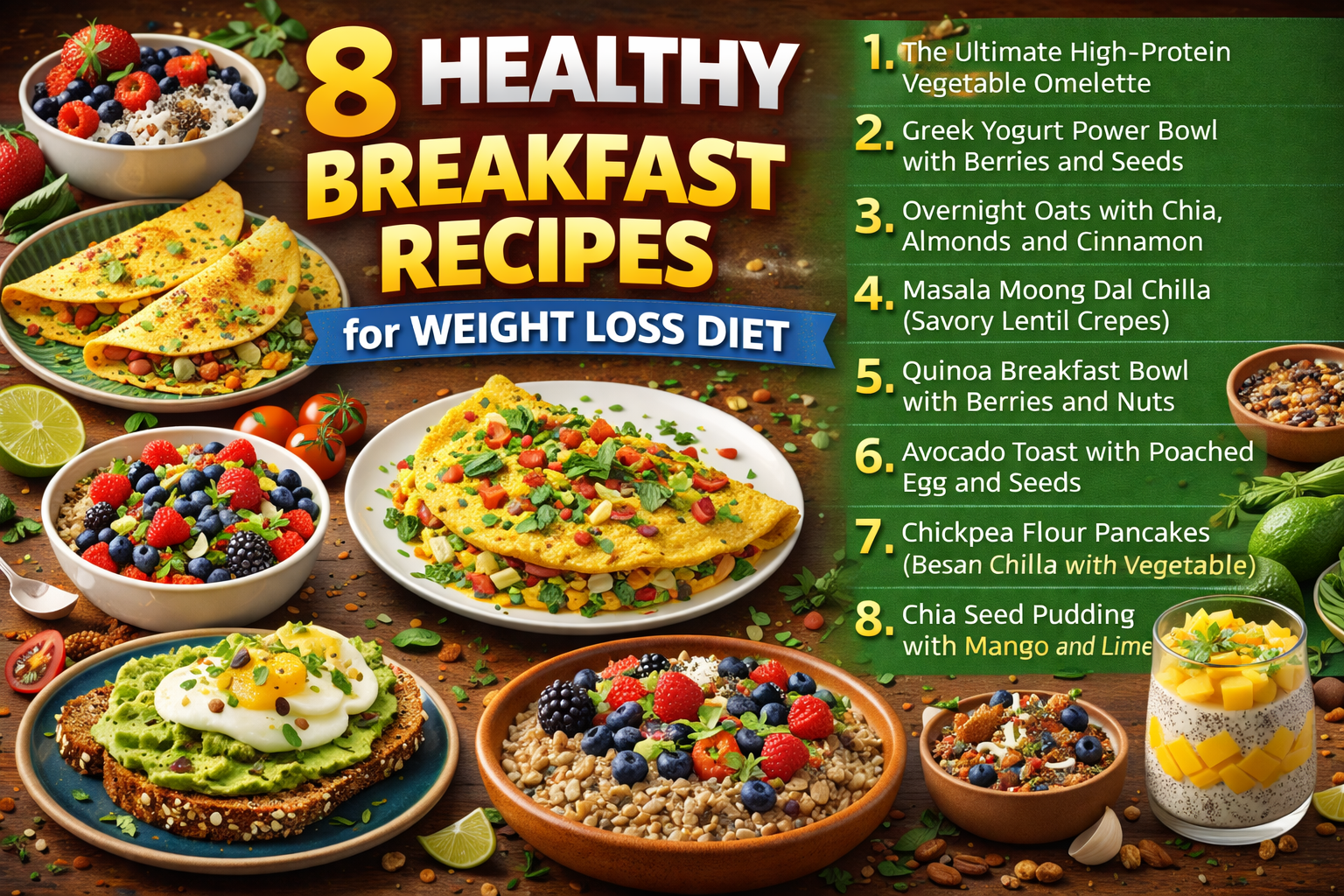
8 Healthy Breakfast Recipes for Weight Loss Diet : The journey toward weight loss is often paved with good intentions that collide with the reality of busy mornings. The standard advice—”don’t skip breakfast”—echoes in our ears, yet the question remains: what should we eat? The answer is far more nuanced than a simple bowl of cornflakes or a piece of dry toast. A breakfast designed for weight loss must accomplish several critical tasks simultaneously. It must be low in empty calories yet high in nutrients, rich in protein to promote satiety, packed with fiber to regulate digestion and blood sugar, and most importantly, it must be delicious enough to look forward to each morning.
The recipes that follow are crafted with these principles in mind. They are not about deprivation or tiny portions. Instead, they focus on whole, unprocessed ingredients that work with your body’s natural metabolism. They incorporate healthy fats that keep you full, complex carbohydrates that provide sustained energy without the dreaded mid-morning crash, and lean proteins that support muscle maintenance during weight loss. Each recipe has been designed to be quick enough for a weekday morning while being satisfying enough to keep you away from the vending machine until lunch. Here are eight healthy breakfast recipes that will support your weight loss goals without making you feel like you’re on a diet.
Read More : 7 Fast & Simple Lunch Recipes (Veg),
10 One-Pan Vegetarian Meals for Lazy Days
15 Quick Tiffin Recipes for Office & School,
9 Instant Street-Style Veg Snacks at Home
1. The Ultimate High-Protein Vegetable Omelette
Eggs have long been heralded as the gold standard of weight-loss breakfasts, and for good reason. They are nature’s perfect protein package, containing all nine essential amino acids your body needs. Research has consistently shown that a protein-rich breakfast, particularly one containing eggs, can significantly reduce hunger throughout the day and decrease the number of calories consumed at subsequent meals .
The key to transforming a simple omelette into a weight-loss powerhouse lies in the vegetable-to-egg ratio and the cooking method. Rather than a thin, egg-dominated fold-over, this version bulks up the volume with fibrous vegetables that add texture, flavor, and nutrients without adding significant calories.
To prepare this breakfast, begin with two or three large eggs, whisked thoroughly with a tablespoon of water—this creates steam during cooking, resulting in a fluffier texture. Season with a pinch of black pepper and a touch of salt. In a non-stick pan heated over medium flame, add just a spritz of olive oil from a spray bottle to keep the fat content minimal. Sauté a generous handful of chopped vegetables first: spinach, which wilts down dramatically, bell peppers for sweetness and vitamin C, mushrooms for their meaty texture and B-vitamins, and a few cherry tomatoes halved. Once the vegetables have softened slightly and released some of their moisture, pour the beaten eggs over them. Tilt the pan to distribute evenly and cook until the edges set and the bottom is golden. Fold and serve immediately. The volume of vegetables ensures you get a substantial plate of food for very few calories, while the protein keeps your hunger hormones in check for hours.
2. Greek Yogurt Power Bowl with Berries and Seeds
When it comes to dairy for weight loss, Greek yogurt occupies a unique and valuable position. Through a straining process that removes much of the whey, it becomes significantly thicker and more concentrated in protein than regular yogurt. A single serving can deliver anywhere from 15 to 20 grams of protein, which is crucial for preserving lean muscle mass during a calorie deficit .
However, the magic of this breakfast extends beyond the yogurt itself. The combination of protein, fiber, and healthy fats creates a trifecta of satiety that is difficult to beat. Start with a base of plain, unsweetened Greek yogurt—flavored yogurts are often laden with added sugars that can spike insulin and promote fat storage. Top this creamy base with a colorful array of fresh berries: blueberries, rich in antioxidants that combat exercise-induced inflammation; strawberries, which provide vitamin C and sweetness with minimal sugar; and raspberries, which are among the highest-fiber fruits you can eat.
The final layer involves seeds, which are tiny nutritional powerhouses. A tablespoon of chia seeds adds omega-3 fatty acids and, when mixed with the yogurt’s moisture, begins to form a gel-like consistency that slows digestion and prolongs fullness. A sprinkle of pumpkin seeds provides magnesium, zinc, and additional protein. For a touch of natural sweetness without added sugar, a light drizzle of raw honey or a few drops of stevia can be added, though you may find that the berries provide enough sweetness on their own.
3. Overnight Oats with Chia, Almonds, and Cinnamon
Overnight oats have gained tremendous popularity in the health-conscious community, and this popularity is well-deserved. This no-cook method of preparing oats not only saves precious morning time but also transforms the nutritional profile of the grain. Soaking oats overnight breaks down the phytic acid, a compound that can inhibit mineral absorption, making the oats’ nutrients—including magnesium, zinc, and iron—more bioavailable to your body .
The base recipe is simple: combine half a cup of rolled oats (avoid instant oats, which are more processed and have a higher glycemic impact) with half a cup of unsweetened almond milk or any other plant-based milk. Add a tablespoon of chia seeds, which will absorb liquid and create a pudding-like texture while contributing healthy fats and fiber. A dash of cinnamon is non-negotiable here—cinnamon has been studied for its potential to improve insulin sensitivity and help regulate blood sugar, which is particularly beneficial for those trying to lose weight .
Stir everything together in a jar or bowl, ensuring the chia seeds are well distributed so they don’t clump. Refrigerate overnight. In the morning, the mixture will have thickened into a creamy, ready-to-eat breakfast. Top with a small handful of sliced almonds for crunch and healthy monounsaturated fats, and perhaps a few more fresh berries. The beauty of this breakfast is its portability—you can grab the jar and eat it at your desk, making it ideal for busy mornings when every minute counts.
4. Masala Moong Dal Chilla (Savory Lentil Crepes)
Drawing inspiration from traditional Indian cuisine, Moong Dal Chilla offers a savory, deeply satisfying breakfast that is naturally gluten-free and exceptionally high in plant-based protein. Unlike many Western breakfast options that rely heavily on refined flours and sugars, this savory crepe uses split yellow moong dal (lentils) as its base, providing a slow-burning energy source that won’t lead to mid-morning energy crashes .
The preparation requires a small amount of foresight but minimal morning effort. The night before, rinse half a cup of split yellow moong dal thoroughly and soak it in water. In the morning, drain the soaked dal and transfer it to a blender. Add a small piece of ginger, a green chili (adjust based on your spice tolerance), a pinch of salt, and just enough water to facilitate blending. Grind to a smooth batter—it should be of pouring consistency, similar to pancake batter. Pour this batter into a bowl and stir in finely chopped onions, tomatoes, fresh coriander, and a sprinkle of cumin seeds.
Heat a non-stick pan and grease it lightly with a spray of oil. Pour a ladleful of batter and spread it gently into a circle. Cook until the bottom is golden and the edges begin to lift, then flip and cook the other side. These chillas are incredibly versatile and can be customized with whatever vegetables you have on hand—grated carrots, finely chopped spinach, or bell peppers all work beautifully. Serve them with a side of mint chutney or a simple tomato salsa. The high protein and fiber content ensures that this breakfast keeps you full well past the lunch hour.
5. Quinoa Breakfast Bowl with Berries and Nuts
Quinoa has earned its reputation as a superfood, but it remains underutilized in breakfast contexts. This ancient grain, technically a seed, is one of the few plant foods that provides complete protein, containing all nine essential amino acids. For those looking to lose weight, quinoa offers the perfect combination of protein, fiber, and complex carbohydrates that digest slowly, providing sustained energy without blood sugar spikes .
Preparing quinoa for breakfast is straightforward and can be done in batch to streamline multiple mornings. Cook quinoa in water or unsweetened almond milk according to package directions—typically a ratio of one part quinoa to two parts liquid. For added flavor without calories, consider adding a cinnamon stick to the cooking liquid or a pinch of cardamom.
Once cooked and slightly cooled, transfer the quinoa to a bowl. Top with a generous handful of mixed berries—blueberries, raspberries, and sliced strawberries provide vibrant color, antioxidants, and natural sweetness. Sprinkle with chopped walnuts or pecans, which contribute healthy omega-3 fatty acids and a satisfying crunch. If you desire additional creaminess without the calories, a splash of unsweetened almond milk can be stirred in. For those who prefer a savory breakfast, quinoa also adapts beautifully to savory preparations—simply omit the fruit and nuts and top with a poached egg and sautéed vegetables.
6. Avocado Toast with Poached Egg and Seeds
Avocado toast has become something of a cultural phenomenon, and while it has been subject to culinary clichés, its nutritional credentials for weight loss are genuinely impressive. Avocados are rich in monounsaturated fats, which have been shown to promote feelings of fullness and satisfaction. When combined with the protein of a poached egg and the fiber of whole-grain bread, this breakfast becomes a perfectly balanced meal that supports weight loss goals .
The key to keeping this breakfast weight-loss friendly lies in portion control and bread selection. Choose a high-quality, dense whole-grain or sprouted grain bread that contains minimal added sugars and a high fiber content. Toast it until crisp. While the bread is toasting, bring a small pot of water to a gentle simmer with a splash of vinegar—this helps the egg white coagulate quickly. Create a gentle whirlpool in the water and crack a fresh egg into the center. Cook for about three minutes for a runny yolk.
Mash half a small avocado (the other half can be saved for another day) with a squeeze of fresh lime juice, a pinch of salt, and cracked black pepper. Spread this mixture generously over the toasted bread. Top with the poached egg, and then sprinkle with a combination of seeds—hemp seeds, chia seeds, or flaxseeds all work wonderfully. A final flourish of red pepper flakes adds heat and a metabolism-boosting compound called capsaicin. The combination of healthy fats, protein, and fiber creates a breakfast that is as satisfying as it is nutritious.
7. Chickpea Flour Pancakes (Besan Chilla with Vegetables)
Similar to the moong dal chilla but with a different nutritional profile, besan chilla utilizes chickpea flour (gram flour) as its base. Chickpea flour is naturally gluten-free and exceptionally high in protein and fiber. It has a lower glycemic index than wheat flour, meaning it causes a slower, more gradual rise in blood sugar—a critical factor for weight management and preventing cravings .
The batter comes together in minutes, making this an excellent option for mornings when you haven’t done any advance preparation. In a bowl, combine half a cup of chickpea flour with water, whisking to form a smooth, lump-free batter. The consistency should be similar to that of traditional pancake batter—pourable but not watery. To this base, add finely chopped onions, grated carrots, finely chopped spinach, fresh coriander, green chilies, and a pinch of turmeric for its anti-inflammatory properties. Season with salt and a sprinkle of cumin seeds.
Heat a non-stick pan and spray lightly with oil. Pour a ladleful of batter and spread it gently into a circle. Cook until the bottom is set and golden, then flip carefully—these pancakes are more delicate than those made with wheat flour. Cook the other side until done. These chillas are incredibly satisfying on their own, but they pair beautifully with a simple yogurt dip made from whisked low-fat yogurt with mint and cucumber. The protein from the chickpea flour combined with the fiber from the vegetables makes this a weight-loss powerhouse that feels indulgent but is entirely wholesome.
8. Chia Seed Pudding with Mango and Lime
Chia seeds have rightfully earned their place in the weight-loss pantry. These tiny seeds are capable of absorbing up to 12 times their weight in water, forming a gel-like substance in the stomach that significantly slows digestion and prolongs feelings of fullness. They are rich in omega-3 fatty acids, which have anti-inflammatory properties, and provide a surprising amount of protein and fiber for their size .
Creating a chia pudding is almost absurdly simple, yet the result feels like a dessert-worthy treat. In a jar or bowl, combine three tablespoons of chia seeds with one cup of unsweetened almond milk or coconut milk. Add a drop of vanilla extract and a natural sweetener if desired—mashed ripe banana, a few drops of stevia, or a teaspoon of maple syrup all work. Stir vigorously, wait five minutes, and stir again to prevent clumping. Refrigerate overnight or for at least four hours.
In the morning, the mixture will have transformed into a thick, pudding-like consistency. Top with fresh mango cubes—mango provides vitamin A, vitamin C, and natural sweetness—and a generous squeeze of fresh lime juice. The lime cuts through the richness of the chia seeds and brightens the entire dish. A sprinkle of unsweetened coconut flakes adds texture and a tropical flair. This breakfast tastes indulgent and sweet, yet it contains no added sugars (if you use ripe mango) and provides sustained energy that will carry you through the most demanding morning.
| Breakfast Recipe | Key Ingredients | Prep Time | Why It Works for Weight Loss |
|---|---|---|---|
| High-Protein Vegetable Omelette | Eggs, spinach, bell peppers, mushrooms | 10 minutes | High protein boosts satiety; vegetables add volume with minimal calories. |
| Greek Yogurt Power Bowl | Greek yogurt, mixed berries, chia seeds, pumpkin seeds | 5 minutes | High protein and fiber; probiotics support gut health. |
| Overnight Oats with Chia | Rolled oats, almond milk, chia seeds, cinnamon, almonds | 5 minutes (night before) | High fiber slows digestion; cinnamon may improve insulin sensitivity. |
| Masala Moong Dal Chilla | Split moong dal, ginger, vegetables, spices | 15 minutes | Plant-based protein and fiber; gluten-free; customizable with vegetables. |
| Quinoa Breakfast Bowl | Quinoa, mixed berries, walnuts, almond milk | 20 minutes | Complete protein source; complex carbs provide steady energy. |
| Avocado Toast with Poached Egg | Whole-grain bread, avocado, egg, seeds | 15 minutes | Healthy fats and protein promote fullness; fiber from whole grains. |
| Besan Chilla with Vegetables | Chickpea flour, onions, carrots, spinach, spices | 15 minutes | Low glycemic index; high protein and fiber; naturally gluten-free. |
| Chia Seed Pudding | Chia seeds, almond milk, mango, lime | 5 minutes (night before) | Chia seeds form gel in stomach, slowing digestion and prolonging fullness. |
The Science Behind Weight Loss Breakfasts
Understanding why these breakfasts work requires a brief exploration of the physiology of hunger and metabolism. When you eat a breakfast high in refined carbohydrates and sugars—think pastries, sugary cereals, or white bread—your blood sugar rises rapidly, prompting a corresponding surge in insulin. Insulin’s job is to shuttle glucose into cells for energy, but when present in high amounts, it also signals the body to store fat and inhibits the breakdown of existing fat stores. Furthermore, this sharp rise in blood sugar is typically followed by a sharp crash, leaving you feeling hungry, irritable, and craving more carbohydrates within a few hours .
The recipes presented here take a different approach. They are built on a foundation of protein, fiber, and healthy fats, all of which slow the digestion and absorption of carbohydrates. This results in a gradual, steady rise in blood sugar rather than a dramatic spike. The hormone ghrelin, often called the “hunger hormone,” remains suppressed for longer, while hormones like peptide YY and GLP-1, which signal fullness to the brain, are released and remain elevated. This hormonal environment makes it physiologically easier to consume fewer calories throughout the day without feeling deprived .
Practical Strategies for Breakfast Success
Beyond the recipes themselves, certain strategies can make or break your ability to maintain a healthy breakfast routine while pursuing weight loss. The first is preparation. Many of these recipes—the overnight oats, the chia pudding, the pre-soaked dal for chillas—can be prepared the night before. Mornings are often rushed and stressful, and stress itself can lead to poor food choices. By removing the decision-making and preparation burden from the morning, you set yourself up for success.
Another crucial strategy is listening to your body’s hunger cues. Weight loss does not require forcing yourself to eat if you’re not hungry, nor does it require starving yourself until lunch. Some people find that a smaller breakfast works better for them, while others need a more substantial morning meal. Pay attention to how your body responds to different foods and portion sizes. The goal is not to adhere rigidly to a prescribed plan but to develop a sustainable way of eating that supports your health and weight goals over the long term.
Conclusion : 8 Healthy Breakfast Recipes for Weight Loss Diet
The path to weight loss need not be paved with bland, unsatisfying meals that leave you feeling deprived and resentful. These eight breakfast recipes demonstrate that nourishing your body and supporting your weight loss goals can be a delicious, varied, and deeply satisfying experience. By focusing on whole foods—eggs, yogurt, lentils, oats, quinoa, fruits, vegetables, and healthy fats—you provide your body with the nutrients it needs to function optimally while naturally regulating your appetite and energy levels.
The principles underlying these recipes—high protein, ample fiber, healthy fats, and minimal added sugars—are supported by a robust body of nutritional science. They work not through magic or extreme restriction but by working with your body’s natural regulatory systems. As you incorporate these breakfasts into your routine, pay attention to how you feel. Notice the absence of mid-morning cravings, the steady energy that carries you through to lunch, and the satisfaction that comes from eating food that truly nourishes you.
Weight loss is a journey, and breakfast is simply the first step. By starting your day with intention and choosing foods that support rather than sabotage your goals, you set a positive tone for all the eating decisions that follow. These recipes are tools to help you build a healthier relationship with food—one breakfast at a time.
5 thoughts on “8 Healthy Breakfast Recipes for Weight Loss Diet”