
10 Simple Indian Breakfast Recipes for Beginners : Stepping into the world of Indian breakfast cooking for the first time can feel like entering a bustling spice market—vibrant, exciting, but perhaps a little overwhelming. The aroma of cumin sizzling in hot oil, the sight of golden, fluffy idlis, the comforting warmth of a bowl of upma—these are the sensory experiences that define mornings in millions of Indian homes. Yet for a beginner, the question is often: where do I start?
The answer is simpler than you might think. Indian breakfast cuisine, at its heart, is built on a foundation of a few core techniques and a handful of essential ingredients. Once you understand the basics—like how to temper spices, how to make a simple batter, and how to cook flattened rice—you unlock the ability to create an incredible array of delicious, satisfying meals. This collection of 10 simple Indian breakfast recipes is carefully curated for beginners. These are the dishes that home cooks across India make for their families on ordinary weekday mornings. They are forgiving, adaptable, and deeply satisfying. They require no special equipment, no hard-to-find ingredients, and no advanced culinary skills. All they ask is a little patience and a willingness to enjoy the process.
So, tie on your apron, gather your spices, and let’s embark on a delicious journey into the heart of Indian breakfast cooking. By the time you’ve worked through these 10 recipes, you will have built a solid foundation of skills and a repertoire of meals that will serve you for a lifetime.
Read More : 12 Quick South Indian Breakfast Recipes
10 Nutritious Breakfast Ideas for a Healthy Lifestyle
10 Quick Paneer Breakfast Recipes for Protein Boost
8 Healthy Breakfast Recipes for Weight Loss Diet
10 Traditional Indian Breakfasts You Can Make Fast
The Beginner’s Guide to Indian Breakfast Cooking
Before you begin, understanding a few essential concepts will make your journey smoother and more successful.
- The Magic of Tadka (Tempering): This is a fundamental technique in Indian cooking. It involves heating oil or ghee in a small pan and frying whole spices (like mustard seeds, cumin seeds, or dried red chilies) for a few seconds until they crackle and release their aromatic oils. This flavored oil is then poured over a finished dish or used as the first step in a recipe. It adds incredible depth of flavor in seconds .
- Essential Spices for Your Pantry: You don’t need dozens of spices to start. These seven will cover almost all the recipes in this guide:
- Cumin Seeds (Jeera): For tempering and adding an earthy, warm flavor.
- Mustard Seeds (Rai): Used in tempering, especially in South Indian dishes.
- Turmeric Powder (Haldi): For color and its mild, earthy flavor.
- Curry Leaves: Fresh leaves used in tempering for a distinct, aromatic flavor.
- Red Chili Powder (Lal Mirch): For heat and color. Start with less and adjust to your taste.
- Coriander Powder (Dhania): A foundational spice with a lemony, slightly sweet flavor.
- Asafoetida (Hing): A pungent resin used in tiny quantities in tadkas. It aids digestion and adds a unique savory note.
- Mise en Place is Your Friend: Indian cooking moves quickly once it starts. Have all your onions chopped, your spices measured, and your ingredients ready before you turn on the heat. This preparation ensures a smooth, stress-free cooking experience .
- Don’t Fear Mistakes: Every cook has had a dish that was too salty or a batter that was too thin. It is all part of the learning process. Be kind to yourself and keep practicing .
The Recipes: 10 Simple Indian Breakfasts for Beginners
Here are 10 recipes that will build your confidence and fill your kitchen with wonderful aromas.
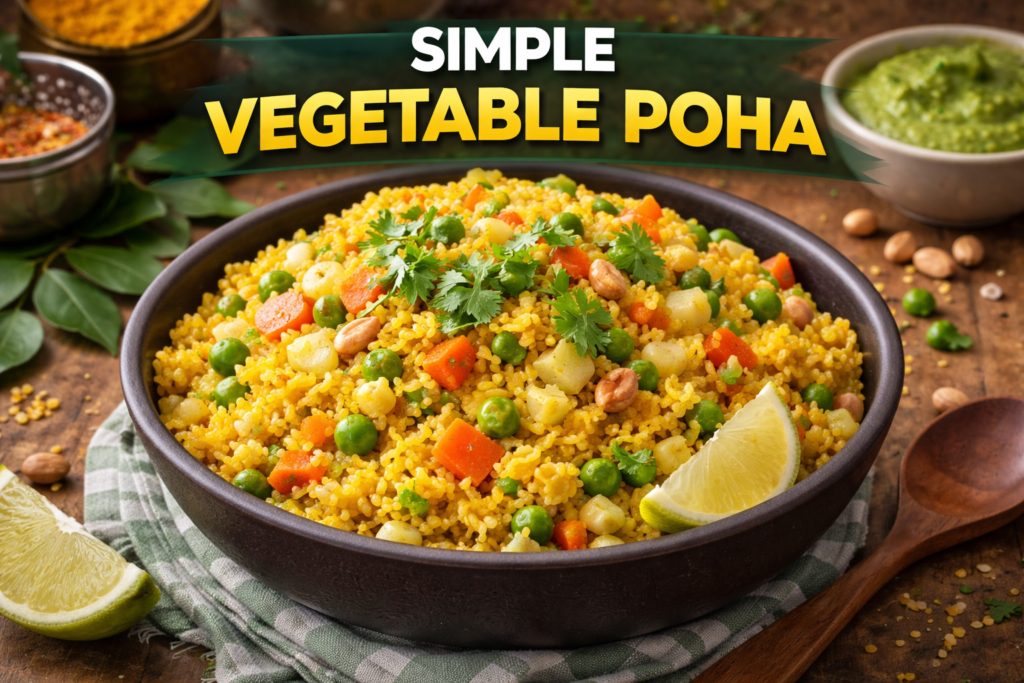
1. Simple Vegetable Poha
Poha is the ultimate beginner-friendly Indian breakfast. It requires no cooking in the traditional sense—just a quick rinse of the flattened rice and a simple tempering. Light, flavorful, and satisfying, it is the perfect introduction to Indian breakfast cooking.
Why It’s Great for Beginners: It teaches you the fundamental technique of tempering and how to cook with minimal ingredients. It is nearly impossible to mess up.
Time: 10 minutes
Ingredients:
- 2 cups thick poha (flattened rice)
- 1 tablespoon oil
- ½ teaspoon mustard seeds
- ½ teaspoon cumin seeds
- A pinch of asafoetida (hing)
- 8-10 curry leaves
- 1-2 green chilies, slit
- 1 small onion, finely chopped
- ¼ cup raw peanuts
- ¼ teaspoon turmeric powder
- Salt to taste
- 1 tablespoon lemon juice
- 2 tablespoons fresh coriander, chopped
Instructions:
- Place the poha in a colander and rinse it gently under cold running water for a few seconds until it softens. Do not soak. Drain well and set aside.
- Heat oil in a pan over medium heat. Add the mustard seeds and let them splutter.
- Add the cumin seeds, asafoetida, curry leaves, and green chilies. Sauté for a few seconds.
- Add the chopped onion and sauté until soft.
- Add the raw peanuts and roast for a minute until they start to change color.
- Add the turmeric powder and salt. Mix well.
- Add the soaked poha to the pan. Gently mix everything together.
- Cover and cook on low heat for 2 minutes.
- Turn off the heat, stir in the lemon juice, and garnish with fresh coriander. Serve hot .
2. Rava Upma (Semolina Porridge)
Upma is a classic South Indian breakfast that is warm, comforting, and endlessly customizable. Made from dry roasted semolina (rava), it comes together in minutes and is a staple in countless homes.
Why It’s Great for Beginners: It teaches you the importance of roasting grains before cooking and the technique of adding them slowly to boiling water to prevent lumps.
Time: 12 minutes
Ingredients:
- 1 cup coarse rava (semolina)
- 2 tablespoons oil or ghee
- 1 teaspoon mustard seeds
- 1 teaspoon cumin seeds
- 1 teaspoon chana dal (optional)
- A pinch of asafoetida (hing)
- 8-10 curry leaves
- 1-2 green chilies, slit
- 1-inch piece of ginger, grated
- 1 small onion, finely chopped
- 2 cups water
- Salt to taste
- 1 tablespoon lemon juice
- 2 tablespoons fresh coriander, chopped
Instructions:
- Dry roast the rava in a pan over low heat, stirring constantly, until it becomes fragrant and slightly changes color, about 3-4 minutes. Remove and set aside.
- In the same pan, heat the oil over medium heat. Add the mustard seeds and let them splutter.
- Add the cumin seeds, chana dal (if using), asafoetida, curry leaves, green chilies, and ginger. Sauté until the dal turns golden brown.
- Add the chopped onion and sauté until soft.
- Add the water and salt. Bring to a rolling boil.
- Reduce the heat to low. Slowly add the roasted rava to the boiling water while stirring continuously with a whisk or spoon. This constant stirring is crucial to prevent lumps.
- Cover and cook on low heat for 2-3 minutes until all the water is absorbed and the upma is cooked through.
- Turn off the heat, stir in the lemon juice, and garnish with fresh coriander. Serve hot .
3. Besan Chilla (Gram Flour Pancakes)
These savory, protein-packed pancakes are a staple in many Indian homes. Made from gram flour (besan), they are gluten-free, nutritious, and incredibly versatile. You can add any vegetables you have on hand.
Why It’s Great for Beginners: It is a no-fail recipe that requires no advanced techniques—just mixing a batter and cooking it like a pancake.
Time: 12 minutes
Ingredients:
- 1 cup besan (gram flour)
- 1 small onion, finely chopped
- 1 small tomato, finely chopped
- 1-2 green chilies, finely chopped
- 2 tablespoons fresh coriander, chopped
- ½ teaspoon cumin seeds
- ¼ teaspoon turmeric powder
- Salt to taste
- Water, as needed
- Oil, for cooking
Instructions:
- In a mixing bowl, combine the besan, onion, tomato, green chilies, coriander, cumin seeds, turmeric, and salt.
- Gradually add water while whisking to form a smooth batter with a pouring consistency, similar to regular pancake batter. Ensure there are no lumps.
- Heat a non-stick tawa or griddle over medium heat. Lightly grease it with oil.
- Pour a ladleful of batter onto the tawa and gently spread it in a circular motion to form a thin, even pancake.
- Drizzle a few drops of oil around the edges. Cook until the bottom is golden brown and crisp, about 2 minutes.
- Flip carefully and cook the other side for another 1-2 minutes.
- Serve hot with mint chutney or ketchup .
4. Moong Dal Chilla (Lentil Pancakes)
Similar to besan chilla but made from moong dal, these pancakes are even higher in protein and have a distinct, delicious flavor. They are light, easy to digest, and perfect for a quick breakfast.
Why It’s Great for Beginners: It introduces you to working with lentils and grinding batters. The recipe is forgiving and the results are consistently delicious.
Time: 15 minutes (plus 30 minutes soaking)
Ingredients:
- 1 cup split yellow moong dal, soaked for 30 minutes
- 1 small onion, finely chopped
- 1 small tomato, finely chopped
- 1-2 green chilies, finely chopped
- 1-inch piece of ginger, grated
- 2 tablespoons fresh coriander, chopped
- ½ teaspoon cumin seeds
- Salt to taste
- Water, as needed
- Oil, for cooking
Instructions:
- Drain the soaked moong dal and rinse well. In a blender, grind the dal with a little water to a smooth, thick paste, similar to pancake batter consistency.
- Transfer the batter to a bowl. Add the chopped onion, tomato, green chilies, ginger, coriander, cumin seeds, and salt. Mix well. Add a little water if the batter is too thick.
- Heat a non-stick tawa over medium heat. Lightly grease it with oil.
- Pour a ladleful of batter onto the tawa and spread it into a thin, even pancake.
- Drizzle oil around the edges. Cook until the bottom is golden brown, then flip and cook the other side.
- Serve hot with mint chutney .
5. Bread Upma (Indian-Style Spiced Bread)
This ingenious dish transforms humble bread into a delicious, savory breakfast. It is the perfect way to use up bread that is slightly past its prime and introduces beginners to the concept of transforming leftovers into something new.
Why It’s Great for Beginners: It uses familiar ingredients (bread) and teaches you how to create a flavorful dish with simple tempering and minimal effort.
Time: 12 minutes
Ingredients:
- 4 slices of bread, cut into 1-inch cubes
- 2 tablespoons oil
- 1 teaspoon mustard seeds
- 1 teaspoon cumin seeds
- A pinch of asafoetida (hing)
- 8-10 curry leaves
- 1-2 green chilies, slit
- 1 small onion, finely chopped
- ¼ cup finely chopped vegetables (carrot, bell pepper, peas)
- ¼ teaspoon turmeric powder
- Salt to taste
- 1 tablespoon lemon juice
- 2 tablespoons fresh coriander, chopped
Instructions:
- If the bread is fresh, lightly toast the cubes in a dry pan or oven for a few minutes to dry them out slightly. This helps them hold their shape better.
- Heat oil in a large pan over medium heat. Add the mustard seeds and let them splutter.
- Add the cumin seeds, asafoetida, curry leaves, and green chilies. Sauté for a few seconds.
- Add the chopped onion and sauté until soft.
- Add the vegetables and sauté for 2 minutes.
- Add the turmeric powder and salt. Mix well.
- Add the bread cubes to the pan. Toss gently to combine. Cook for 2-3 minutes, tossing occasionally, until the bread is heated through and slightly crisp.
- Turn off the heat, stir in the lemon juice, and garnish with fresh coriander. Serve hot .
6. Masala Oats (Savory Indian Oats)
This modern twist on a traditional breakfast is healthy, quick, and delicious. Oats are cooked with onions, tomatoes, and warm spices, creating a comforting and nutritious meal that is perfect for beginners.
Why It’s Great for Beginners: It uses familiar ingredients and a simple one-pan method. Oats are forgiving and cook quickly.
Time: 8 minutes
Ingredients:
- 1 cup rolled oats
- 1 tablespoon oil
- ½ teaspoon mustard seeds
- ½ teaspoon cumin seeds
- A pinch of asafoetida (hing)
- 8-10 curry leaves
- 1-2 green chilies, slit
- 1 small onion, finely chopped
- 1 small tomato, finely chopped
- ¼ cup green peas (fresh or frozen)
- ¼ teaspoon turmeric powder
- Salt to taste
- 2 cups water
- Fresh coriander, for garnish
Instructions:
- Heat oil in a pan over medium heat. Add the mustard seeds and let them splutter.
- Add the cumin seeds, asafoetida, curry leaves, and green chilies. Sauté for a few seconds.
- Add the chopped onion and sauté until soft.
- Add the chopped tomato and cook until soft.
- Add the peas, turmeric, and salt. Sauté for a minute.
- Add the water and bring to a boil.
- Add the rolled oats and stir well. Reduce heat to low and cook for 3-4 minutes, stirring occasionally, until the oats are cooked and have absorbed most of the water.
- Garnish with fresh coriander and serve hot .
7. Eggless Masala Omelette (Besan Omelette)
This eggless version of the classic masala omelette uses besan as its base and is packed with vegetables and spices. It is protein-rich, flavorful, and ready in minutes, making it perfect for beginners who want a savory breakfast without eggs.
Why It’s Great for Beginners: It follows the same simple batter-and-cook method as besan chilla, building on a skill you have already learned.
Time: 10 minutes
Ingredients:
- ½ cup besan (gram flour)
- ¼ cup water (approx.)
- 1 small onion, finely chopped
- 1 small tomato, finely chopped
- 1-2 green chilies, finely chopped
- 2 tablespoons fresh coriander, chopped
- ½ teaspoon cumin seeds
- ¼ teaspoon turmeric powder
- Salt to taste
- Oil, for cooking
Instructions:
- In a bowl, whisk together the besan and water to form a smooth batter with a pouring consistency.
- Add the chopped onion, tomato, green chilies, coriander, cumin seeds, turmeric, and salt. Mix well.
- Heat a non-stick skillet over medium heat and add a little oil.
- Pour the batter into the skillet and spread it into a round, even layer, like an omelette.
- Cook for 2-3 minutes until the bottom is golden brown and set.
- Carefully flip and cook the other side for another 1-2 minutes.
- Serve hot with toast or chutney .
8. Suji Ka Halwa (Semolina Pudding)
This simple, comforting dessert is often made for breakfast or as a quick sweet treat. Semolina is roasted in ghee, then cooked with water, sugar, and cardamom until soft and fragrant. It is a warm, nourishing way to start the day.
Why It’s Great for Beginners: It teaches you the importance of roasting grains in ghee for flavor and the technique of slow cooking to achieve the right consistency.
Time: 10 minutes
Ingredients:
- ½ cup fine sooji (semolina)
- ¼ cup ghee
- ½ cup sugar (adjust to taste)
- 1½ cups water
- 4-5 green cardamom pods, crushed
- 2 tablespoons chopped nuts (almonds, cashews)
- 1 tablespoon raisins (optional)
Instructions:
- Heat ghee in a heavy-bottomed pan over medium heat. Add the sooji and roast, stirring constantly, until it becomes fragrant and turns light golden brown, about 3-4 minutes.
- Add the chopped nuts and raisins and roast for another minute.
- Carefully add the water (it will splutter) and the crushed cardamom. Stir continuously to prevent lumps.
- Cook on low heat, stirring, until the sooji absorbs the water and becomes soft and pudding-like.
- Add the sugar and stir until dissolved. Cook for another 2-3 minutes until the halwa thickens and leaves the sides of the pan.
- Serve warm .
9. Aloo Paratha (Simple Version)
Aloo paratha is a beloved North Indian breakfast, but traditional versions can be intimidating for beginners. This simplified version uses a forgiving dough and a straightforward stuffing technique that anyone can master.
Why It’s Great for Beginners: It introduces you to working with dough and stuffing flatbreads. The recipe is designed to be forgiving and successful on the first try.
Time: 25 minutes
Ingredients:
- 2 cups whole wheat flour
- Water, as needed
- Salt to taste
- 1 tablespoon oil
- 2 medium potatoes, boiled and mashed
- 1 small onion, finely chopped (optional)
- 1-2 green chilies, finely chopped
- 2 tablespoons fresh coriander, chopped
- ½ teaspoon cumin seeds
- ½ teaspoon amchur (dry mango powder)
- Salt to taste
- Ghee or oil, for cooking
Instructions:
- Make the dough: In a bowl, combine the whole wheat flour and salt. Add water gradually and knead into a soft, pliable dough. Add the oil and knead again. Cover and let it rest for 15 minutes.
- Prepare the filling: In a bowl, combine the mashed potatoes with onion, green chilies, coriander, cumin seeds, amchur, and salt. Mix well. Divide into equal-sized balls.
- Assemble: Divide the dough into balls slightly larger than the filling balls. Roll one dough ball into a small circle. Place a filling ball in the center. Bring the edges together to seal. Gently flatten and roll out into a circle of about 5-6 inches. Don’t worry if it’s not perfect.
- Cook: Heat a tawa over medium heat. Place the rolled paratha on it. Cook for about 30 seconds, then flip. Apply ghee on the cooked side, flip again, and apply ghee on the other side. Cook until both sides have golden brown spots.
- Serve hot with yogurt or pickle .
10. Masala Chai (Spiced Indian Tea)
No introduction to Indian breakfast would be complete without learning to make a proper cup of chai. This spiced, milky tea is the beverage that fuels the nation, and making it is a ritual in itself.
Why It’s Great for Beginners: It teaches you about infusing flavors and the art of simmering, a fundamental technique. It is also incredibly rewarding.
Time: 8 minutes
Ingredients:
- 1 cup water
- 1 cup whole milk
- 2 teaspoons loose black tea leaves (or 2 tea bags)
- 2 teaspoons sugar (adjust to taste)
- 2-3 green cardamom pods, lightly crushed
- 1 small piece of ginger, crushed
- Optional: 1-2 cloves, a small piece of cinnamon stick
Instructions:
- In a saucepan, combine the water, crushed cardamom, ginger, and any other whole spices. Bring to a boil.
- Add the tea leaves and sugar. Reduce heat and let it simmer for 2-3 minutes.
- Add the milk and bring the mixture back to a boil. Watch carefully, as it can boil over quickly.
- Reduce heat and let it simmer for another 2-3 minutes, allowing the flavors to meld.
- Strain the chai into cups and serve hot .
Tips for Beginner Success
- Read the Recipe First: Before you start cooking, read the entire recipe from beginning to end. This helps you understand the flow and ensures you have all your ingredients ready .
- Prep Everything (Mise en Place): Have all your ingredients measured, chopped, and ready before you turn on the heat. Indian cooking moves quickly .
- Start with Less Spice: If you are unsure about the heat level, start with half the amount of green chilies or red chili powder. You can always add more at the end .
- Don’t Be Afraid to Make Mistakes: Every cook has had failures. Learn from them and keep practicing .
- Taste as You Go: Salt levels and spice heat are personal. Taste your food at different stages and adjust accordingly .
- Enjoy the Process: Cooking is a journey, not just a destination. Enjoy the aromas, the sizzling sounds, and the satisfaction of creating something delicious .
Conclusion : 10 Simple Indian Breakfast Recipes for Beginners
Embarking on your Indian breakfast cooking journey with these 10 beginner-friendly recipes is an invitation to discover the warmth, flavor, and deep satisfaction that this cuisine offers. You have learned to temper spices, make simple batters, cook flattened rice, and create flatbreads. These are not just recipes; they are skills that will form the bedrock of your Indian cooking repertoire.
From the comforting simplicity of Vegetable Poha to the protein-packed goodness of Moong Dal Chilla, from the warm, spiced embrace of Masala Chai to the hearty satisfaction of Aloo Paratha, each dish you master will build your confidence and bring you closer to the heart of the Indian kitchen. So, the next time you crave a home-cooked breakfast that nourishes both body and soul, you will know exactly where to start. Happy cooking, and happy mornings.