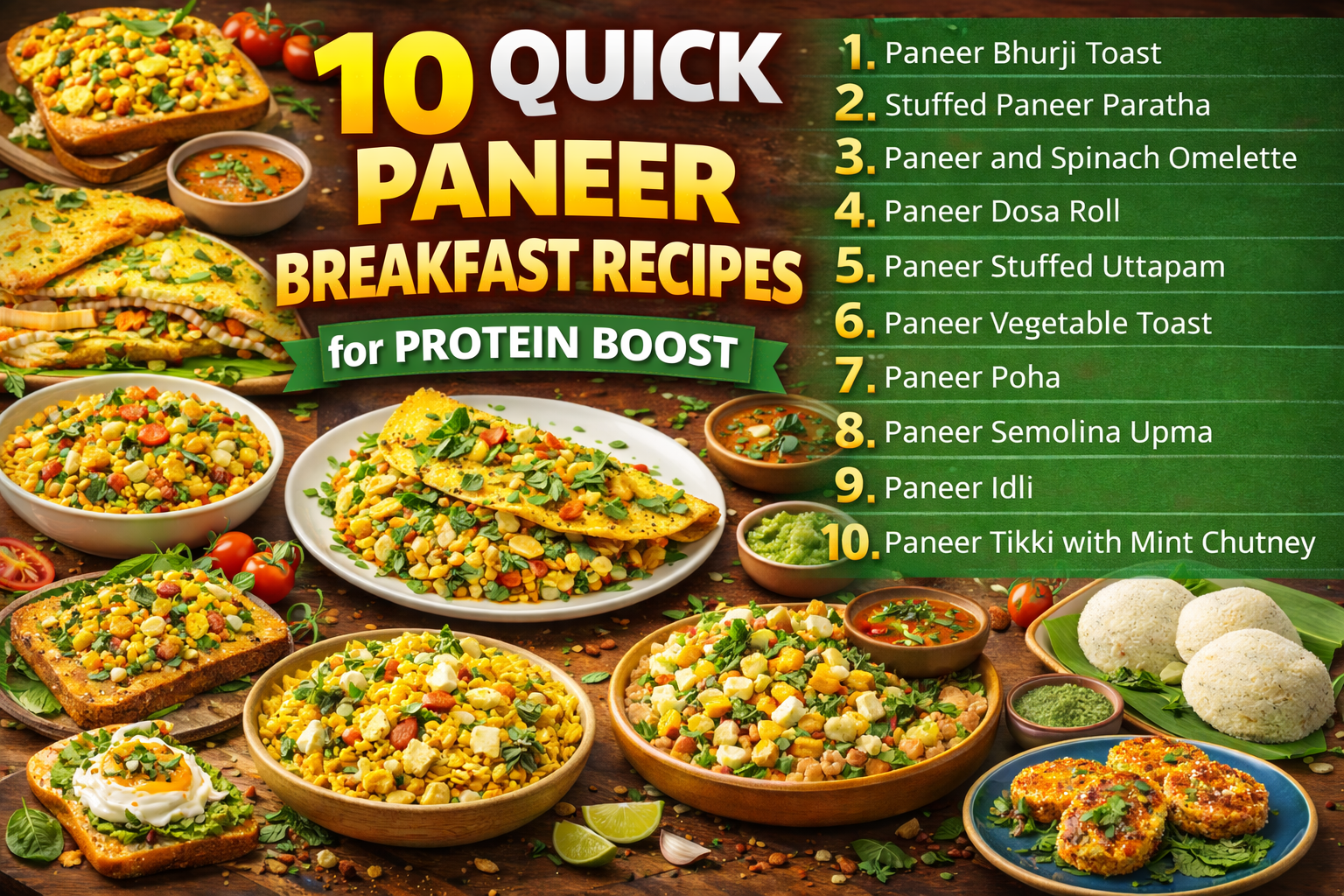
10 Quick Paneer Breakfast Recipes for Protein Boost : In the landscape of Indian vegetarian cuisine, few ingredients command the reverence and versatility of paneer. This fresh, non-melting cottage cheese has been a cornerstone of the subcontinent’s culinary tradition for centuries, appearing in everything from regal Mughlai curries to humble home-cooked sabzis. But beyond its celebrated role in lunch and dinner, paneer holds untapped potential as the ultimate breakfast ingredient for the modern, health-conscious individual.
The nutritional credentials of paneer are genuinely impressive. According to USDA data, 100 grams of paneer delivers approximately 18 grams of high-quality protein, along with substantial calcium for bone health and a favorable profile of fats that provide sustained energy . For vegetarians, it represents one of the most concentrated and bioavailable protein sources available in a typical Indian kitchen. When consumed at breakfast, this protein works to stabilize blood sugar, suppress the hunger hormone ghrelin, and keep you feeling satisfied well past the lunch hour.
The recipes that follow have been carefully selected for their speed, simplicity, and protein density. Each can be prepared in under 20 minutes, using ingredients that are likely already in your refrigerator and pantry. From innovative twists on traditional favorites to creative fusion dishes that reimagine what a protein-rich breakfast can look like, these ten recipes will ensure that your mornings are powered by the very best that Indian cuisine has to offer.
Read More : 9 Instant Street-Style Veg Snacks at Home, 10 Light & Healthy Veg Recipes for Dinner
12 Budget Veg Recipes for Small Families, 5 Quick Festival Special Veg Dishes
1. Paneer Bhurji Toast: The Five-Minute Power Breakfast
If there is one recipe that perfectly encapsulates the marriage of Indian flavors with Western convenience, it is Paneer Bhurji Toast. This dish transforms the classic spiced scrambled paneer into a hand-held breakfast that can be assembled and devoured in the time it takes to brew your morning coffee .
The beauty of this breakfast lies in its simplicity and speed. Begin by crumbling 100 grams of fresh paneer into rough, uneven pieces—the irregularity of hand-crumbling creates pockets of texture that machine-grating cannot replicate. In a pan heated with a small amount of butter or oil, sauté finely chopped onions until they turn translucent and begin to caramelize at the edges. This browning is crucial, as it develops the sweetness that will balance the spices. Add chopped green chilies for heat, followed by tomatoes and finely diced capsicum. The vegetables should be cooked just until they soften but retain a hint of their original texture .
To this aromatic base, add the crumbled paneer along with turmeric powder for its anti-inflammatory properties and a pinch of red chili powder for warmth. The key is to cook the paneer only briefly—two to three minutes at most—stirring gently to coat it with the spices without breaking it down into a paste . Overcooking paneer renders it rubbery and dry, robbing it of its characteristic softness. While the filling cooks, toast slices of whole grain or multigrain bread until golden and crisp. Pile the hot bhurji generously onto the toast, garnish with fresh coriander and a crack of black pepper, and serve immediately . This breakfast delivers a powerful protein punch that will carry you through the most demanding morning.
2. Stuffed Paneer Paratha: The Complete Meal
The stuffed paratha occupies a sacred place in North Indian breakfast tradition, and when filled with spiced paneer, it becomes a protein powerhouse that needs no accompaniment to qualify as a complete meal . The key to making this work on a busy weekday lies in strategic preparation.
The night before, knead a dough using whole wheat flour, salt, and water, then cover and refrigerate. In the morning, take a portion of the dough and roll it into a small disc. For the filling, crumble fresh paneer into a bowl and mix it with finely chopped green chilies, fresh coriander, a pinch of salt, and optionally, a sprinkle of ajwain (carom seeds) which aids digestion . Some cooks also add a small amount of finely grated onion, though this must be squeezed of excess moisture to prevent the paratha from tearing.
Place a generous portion of this filling in the center of the dough disc, gather the edges upward to seal the filling inside, and gently roll the stuffed ball into a flat, round paratha. The rolling must be done with care—too much pressure and the filling will burst through; too little and the paratha will be uneven. Cook on a hot tawa with a minimal amount of ghee or oil, flipping until both sides are golden brown and crisp. The finished paratha should have distinct layers, with the paneer filling distributed evenly throughout. Served with a spoonful of plain curd, which adds additional protein and a cooling contrast to the spices, this breakfast will keep you full and focused until well past noon .
3. Paneer and Spinach Omelette: The Protein Double Hit
For those who include eggs in their diet, combining them with paneer creates a breakfast that borders on protein overkill—in the best possible way. The Paneer and Spinach Omelette brings together two complete protein sources in a dish that cooks in under ten minutes and requires minimal active effort .
Begin by beating two or three eggs in a bowl with a splash of water—this addition of water creates steam during cooking, resulting in a fluffier texture. Season with salt and freshly cracked black pepper. Heat a non-stick pan over medium flame and add a small amount of butter or oil. When the pan is hot, pour in the eggs and tilt to spread them evenly. Before the eggs have fully set, scatter crumbled paneer generously across the surface, followed by a handful of fresh spinach leaves. The spinach will wilt into the eggs as they cook, adding iron, fiber, and volume without significantly increasing calories .
When the edges of the omelette are set and the bottom is golden, carefully fold it in half and cook for another minute to ensure the interior is cooked through. The result is a tender, flavorful omelette where the soft paneer provides pockets of creamy richness against the fluffy eggs. This breakfast is particularly effective for those engaged in morning workouts, as the combination of fast-digesting egg protein and slower-digesting paneer protein provides both immediate and sustained amino acid delivery to repairing muscles.
4. Paneer Dosa Roll: South Indian Innovation
The dosa, that thin and crispy fermented crepe from South India, is already a breakfast favorite. Stuffing it with a spiced paneer filling transforms it into a protein-enriched meal that travels well and satisfies deeply .
For the quickest preparation, use store-bought dosa batter that has already undergone the fermentation process. On a hot dosa tawa, spread a ladleful of batter in a circular motion to create a thin, lacy crepe. Cook until the bottom is golden and the edges begin to lift from the pan. While the dosa cooks, prepare the filling in a separate pan. Sauté finely chopped onions and capsicum until softened, then add crumbled paneer along with pav bhaji masala or a blend of cumin powder, coriander powder, and red chili powder . This filling comes together in minutes and can even be prepared in advance and reheated.
Spoon the hot paneer filling onto the center of the dosa, fold the sides over, and roll it tightly into a cylinder. The result is a portable, hand-held breakfast that packs the fermented goodness of dosa with the protein density of paneer. Serve with coconut chutney on the side for dipping, or wrap the entire roll in parchment paper for a breakfast that can be eaten on the commute . The combination of fermentation and protein makes this meal surprisingly light on the stomach despite its satisfying nature.
5. Paneer Stuffed Uttapam: The Thick and Hearty Cousin
Where dosa is thin and crisp, uttapam is thick, soft, and studded with vegetables. Adding paneer to this South Indian staple elevates it from a simple breakfast to a substantial meal that needs nothing else to be complete .
Prepare a thick dosa batter or use store-bought batter, ensuring it has a thicker consistency than you would use for dosa—it should be pourable but not runny. Pour a ladleful onto a hot, greased pan and spread it gently into a thick circle—utapams are meant to be substantially thicker than dosas. Before the batter sets, scatter finely chopped onions, tomatoes, green chilies, and a generous amount of grated paneer across the surface. Press the toppings gently into the batter so they adhere during cooking .
Cook on medium heat until the bottom is deeply golden and crisp, then flip carefully and cook the other side briefly. The paneer will soften and slightly melt into the uttapam, creating pockets of creamy richness throughout. This uttapam is satisfying enough to eat on its own, though a side of coconut chutney or a small bowl of sambar certainly doesn’t hurt. The protein from the paneer, combined with the complex carbohydrates from the fermented batter, provides steady energy that releases slowly throughout the morning.
6. Paneer Vegetable Toast: The Grilled Sandwich Upgrade
The humble grilled sandwich undergoes a remarkable transformation when paneer enters the equation. This Paneer Vegetable Toast recipe, inspired by celebrity chef Kunal Kapur, elevates the ordinary sandwich into a protein-rich breakfast that comes together in minutes .
Begin by cubing paneer into small, uniform pieces. In a pan, heat butter and add chopped onions, sautéing until they turn golden brown and slightly crisp at the edges. Add chopped tomatoes and capsicum along with the paneer cubes, seasoning with turmeric powder, red chili powder, and salt. Sauté for just a minute—the vegetables should retain some crunch, and the paneer should remain soft . While the filling cooks, toast slices of whole wheat or multigrain bread in a separate pan with butter until golden and crisp on both sides.
Spoon the hot paneer-vegetable filling onto one slice of toast, top with another slice, and return the assembled sandwich to the pan. Grill for two to three minutes on each side until the bread is crisply toasted and the filling is heated through. Garnish with fresh coriander and a sprinkle of black pepper before serving . This sandwich pairs beautifully with green chutney or a simple tomato ketchup, though it is entirely satisfying on its own. The combination of carbohydrates from the bread and protein from the paneer creates a balanced meal that provides both immediate and sustained energy.
7. Paneer Poha: The Flattened Rice Classic Reimagined
Poha, or flattened rice, is perhaps the quintessential quick Indian breakfast. By adding paneer to this beloved dish, you transform it from a light carbohydrate source into a protein-enriched meal that satisfies on an entirely different level .
Start with thick poha, which holds its shape better during cooking than the thinner variety. Rinse the poha gently in water—just enough to soften it—then drain immediately and set aside. Over-rinsing will result in mushy poha, so this step requires a light touch. In a pan, heat oil and add mustard seeds, allowing them to splutter, followed by curry leaves and chopped green chilies. Add finely chopped onions and sauté until they turn soft and translucent .
At this point, add turmeric powder for color and its anti-inflammatory properties, then gently fold in the paneer. You can use either crumbled paneer for even distribution or small cubes for distinct pockets of cheese. Cook for just a minute to warm the paneer through. Finally, add the soaked poha and salt, mixing gently with a folding motion to avoid breaking the delicate rice flakes. Cover the pan and let the mixture steam on low heat for two to three minutes, allowing the flavors to meld . Finish with fresh coriander and a squeeze of lemon juice, which brightens the entire dish. The paneer adds not only protein but also a creamy texture that beautifully complements the soft poha.
8. Paneer Semolina Upma: The Protein-Packed Porridge
Upma, the savory semolina porridge beloved across South India, typically provides comfort but limited protein. Adding paneer to this breakfast staple transforms its nutritional profile while enhancing its texture and flavor .
This version begins with dry roasting semolina (suji) in a pan until it turns fragrant and just begins to change color—this step is crucial for preventing a raw taste and ensuring the final texture is fluffy rather than pasty. In a separate pan, heat oil and add mustard seeds and cumin seeds, allowing them to splutter. Add finely chopped onions, green chilies, and ginger-garlic paste, sautéing until the onions are translucent. A colorful array of vegetables follows—capsicum, sweet corn, and bell peppers all work beautifully .
To this vegetable mixture, add the roasted semolina and stir to coat it with the spices. In a bowl, whisk together yogurt and water with red chili flakes, black pepper, and salt, then pour this mixture into the pan. Stir continuously as the semolina absorbs the liquid and thickens—this takes only four to five minutes. Finally, fold in crumbled paneer and cook for another two to three minutes. A sprinkle of fruit salt at the end, stirred in just before serving, adds a subtle fluffiness to the dish . Garnished with fresh coriander, this upma delivers protein from both the paneer and the yogurt, creating a breakfast that is light in texture but substantial in its ability to sustain energy.
9. Paneer Idli: Steamed Goodness with a Protein Twist
Idli, those soft and fluffy steamed cakes from South India, are already considered a health food due to their fermentation and steaming. Adding paneer to the batter takes this nutritious breakfast and amplifies its protein content dramatically .
This instant version uses semolina and besan (gram flour) as the base, eliminating the need for overnight fermentation while still delivering a light, airy texture. In a bowl, mix semolina, besan, and curd with enough water to create a smooth, runny batter. The curd adds protein and introduces a pleasant tang. Set this batter aside for about 45 minutes—while this requires some forethought, it can be done while you attend to other morning tasks .
After resting, the batter will have thickened slightly. To it, add crumbled paneer, grated carrots, finely chopped capsicum, and green chilies. These vegetables add color, texture, and additional nutrients. Stir in salt, then just before steaming, add fruit salt (such as Eno) and mix gently—this creates bubbles that will expand during steaming, resulting in fluffy idlis . Pour the batter into greased idli molds and steam for ten to twelve minutes. A toothpick inserted into the center should come out clean when they are done. These idlis are significantly more protein-dense than traditional versions, and they pair beautifully with coconut chutney or a light sambar. The steaming process keeps them light and easily digestible, making them an ideal breakfast for those with sensitive stomachs.
10. Paneer Tikki with Mint Chutney: The Make-Ahead Marvel
For mornings when you know you won’t have time to cook, Paneer Tikki offers the perfect solution. These spiced patties can be prepared in advance and simply reheated, delivering a protein-rich breakfast in the time it takes to brew tea .
The tikki mixture combines crumbled paneer with boiled and mashed potatoes—the potato acts as a binder while adding its own nutritional contributions. To this base, add finely chopped onions, green chilies, fresh coriander, and a ginger-garlic paste. The spices are what elevate these tikkis from simple patties to something truly special: cumin powder, coriander powder, a touch of garam masala, and a pinch of amchur (dry mango powder) for tang all work together to create a complex flavor profile .
Shape the mixture into small, flat patties. At this point, they can be refrigerated for up to three days or frozen for longer storage. When you’re ready to eat, simply pan-fry the tikkis in a minimal amount of oil until both sides are golden brown and crisp. The exterior should be crunchy while the interior remains soft and flavorful. Serve these piping hot with mint chutney, which adds freshness and a cooling contrast to the spiced patties . The aroma of these tikkis frying in the morning is enough to make even the most reluctant early riser look forward to breakfast.
| Breakfast Recipe | Key Ingredients | Prep Time | Protein Source | Distinctive Feature |
|---|---|---|---|---|
| Paneer Bhurji Toast | Paneer, onions, tomatoes, capsicum, bread | 10 mins | Paneer | Spiced scramble on crisp toast |
| Stuffed Paneer Paratha | Whole wheat flour, paneer, green chilies, coriander | 20 mins | Paneer, curd (if served) | Stuffed flatbread; complete meal by itself |
| Paneer & Spinach Omelette | Eggs, paneer, spinach | 8 mins | Eggs, paneer | Double protein source with iron-rich spinach |
| Paneer Dosa Roll | Dosa batter, paneer, onions, capsicum | 15 mins | Paneer, fermented batter | Portable, hand-held breakfast roll |
| Paneer Stuffed Uttapam | Dosa batter, paneer, onions, tomatoes | 15 mins | Paneer, fermented batter | Thick, vegetable-studded pancake |
| Paneer Vegetable Toast | Bread, paneer, onions, tomatoes, capsicum | 12 mins | Paneer | Grilled sandwich with spiced filling |
| Paneer Poha | Thick poha, paneer, onions, curry leaves | 12 mins | Paneer | Traditional flattened rice with protein boost |
| Paneer Semolina Upma | Semolina, paneer, mixed vegetables, yogurt | 15 mins | Paneer, yogurt | Savory porridge with vegetables |
| Paneer Idli | Semolina, besan, curd, paneer, vegetables | 15 mins (+45 mins rest) | Paneer, curd, besan | Steamed, fluffy cakes with hidden vegetables |
| Paneer Tikki | Paneer, potatoes, onions, spices | 20 mins (can be prepped ahead) | Paneer | Spiced patties; ideal for make-ahead preparation |
The Science of Paneer at Breakfast
Understanding why paneer works so effectively as a breakfast food requires a brief exploration of nutritional science. Protein is the most satiating macronutrient, meaning it suppresses hunger more effectively than either carbohydrates or fats. When consumed at breakfast, protein triggers the release of peptide YY and GLP-1, hormones that signal fullness to the brain, while simultaneously suppressing ghrelin, the hunger hormone .
Paneer’s protein profile is particularly valuable because it contains all essential amino acids, making it a complete protein source. This is relatively rare in the plant-based world and explains why paneer features so prominently in vegetarian diets aimed at muscle maintenance and growth. The calcium content of paneer—approximately 200-300 milligrams per 100 grams—adds another dimension of benefit, supporting bone health and metabolic function .
The fat content of paneer, often a concern for those focused on weight loss, actually contributes to its effectiveness as a breakfast food. Dietary fat slows gastric emptying, meaning food stays in the stomach longer and you feel full for an extended period. When combined with protein, this effect is amplified. The key is moderation and preparation method—using minimal oil in cooking and pairing paneer with fiber-rich vegetables and whole grains creates a balanced meal that supports rather than sabotages health goals .
Practical Tips for Paneer Preparation
To maximize the speed and quality of your paneer breakfasts, a few practical considerations are worth keeping in mind. Fresh paneer is always preferable to packaged varieties—it has a softer texture, milder flavor, and better moisture content. If you can find A2 paneer, made from the milk of indigenous cow breeds, it may offer improved digestibility for those sensitive to dairy .
Proper storage extends the life of fresh paneer significantly. Submerge the block in a bowl of cold water and refrigerate, changing the water daily. This method keeps paneer fresh for up to four or five days, ensuring you always have some on hand for quick breakfasts . When a recipe calls for crumbled paneer, it’s often better to crumble by hand than to grate—hand-crumbling produces irregular pieces with varied textures, while grating can make the paneer too fine and cause it to disappear into the dish.
For the fastest possible mornings, consider prepping components in advance. The filling for paneer parathas can be mixed and refrigerated for several days. Paneer tikkis can be shaped and frozen between layers of parchment paper, ready to go directly into the pan. Even the vegetable chopping for bhurji or upma can be done on weekends and stored in airtight containers, reducing morning prep time to mere minutes.
Conclusion : 10 Quick Paneer Breakfast Recipes for Protein Boost
The versatility of paneer as a breakfast ingredient is nothing short of remarkable. It can be scrambled like eggs, stuffed into flatbreads like cheese, folded into omelettes, blended into batters, or simply cubed and tossed with vegetables. In each of these applications, it delivers a concentrated dose of high-quality protein that transforms a simple morning meal into a sustained energy source capable of powering you through the most demanding day.
These ten recipes represent just a fraction of what’s possible with this beloved Indian ingredient. From the five-minute simplicity of Paneer Bhurji Toast to the make-ahead convenience of Paneer Tikki, each has been designed to fit into the reality of busy mornings without compromising on flavor or nutrition. The protein boost they provide isn’t just about hitting a numerical target—it’s about experiencing mornings without the mid-morning energy crash, without the desperate reach for unhealthy snacks, without the distraction of gnawing hunger during important work.
As you incorporate these recipes into your breakfast rotation, pay attention to how your body responds. Notice the sustained energy, the reduced cravings, the simple satisfaction of starting your day with food that truly nourishes. Paneer has been feeding the Indian subcontinent for centuries, and in these quick, protein-packed breakfasts, it continues its legacy—adapting to modern needs while remaining true to its essential nature. Your mornings will never be the same.
5 thoughts on “10 Quick Paneer Breakfast Recipes for Protein Boost”