
10 Healthy Indian Breakfast Ideas for Weight Loss : Morning in an Indian kitchen is a symphony of sounds and aromas—the gentle sizzle of mustard seeds in hot oil, the soft hiss of steam escaping from a pressure cooker, the warm, toasty fragrance of rotis on a tawa. Breakfast in India is not merely a meal; it is a ritual, a moment of nourishment before the day’s activities begin. Yet for those on a weight loss journey, traditional Indian breakfast options can sometimes feel like a minefield of refined flour, deep-fried treats, and carb-heavy dishes that leave you hungry again by mid-morning.
The good news is that Indian cuisine, with its incredible diversity and emphasis on whole foods, offers a wealth of healthy, satisfying breakfast options that support weight loss goals. The principles are simple: prioritize protein and fiber to keep you full, incorporate complex carbohydrates for sustained energy, minimize added sugars and unhealthy fats, and embrace the incredible flavors of spices that not only taste wonderful but also boost metabolism. This collection of 10 healthy Indian breakfast ideas does exactly that. Each recipe is designed to be nutritious, delicious, and easy enough for busy mornings. From protein-packed lentil pancakes to savory vegetable porridges, from spiced scrambled paneer to wholesome rice flakes, these breakfasts will transform your mornings and set you up for weight loss success.
Read More : 7 Instant Poha & Upma Recipes for Busy Mornings
The Principles of a Weight-Loss-Friendly Indian Breakfast
Before we dive into the recipes, understanding the nutritional philosophy behind them will help you make informed choices.
- Protein is Paramount: Protein is the most satiating nutrient. It keeps you feeling full longer, stabilizes blood sugar, and supports muscle maintenance during weight loss. Indian breakfasts can be rich in protein through ingredients like lentils (dal), legumes (chickpeas, moong), paneer, eggs, and yogurt .
- Fiber is Your Friend: Fiber adds bulk to your meal, slows digestion, and promotes feelings of fullness. It also feeds beneficial gut bacteria. Incorporate fiber through vegetables, whole grains, lentils, and seeds .
- Complex Carbs for Sustained Energy: Swap refined flours (maida) and sugary cereals for complex carbohydrates like whole grains (jowar, bajra, ragi), oats, and daliya (broken wheat). These release energy slowly, preventing the mid-morning energy crash and hunger pangs .
- Healthy Fats are Essential: Don’t fear fats. Small amounts of healthy fats from ghee, nuts, seeds, and cooking oils are crucial for nutrient absorption and satiety. The key is moderation .
- Portion Control Matters: Even healthy foods can contribute to weight gain if eaten in excessive quantities. Be mindful of serving sizes. A good breakfast should leave you satisfied, not stuffed .
- Minimize Added Sugar: Many traditional Indian breakfast items can be heavy on sugar. These recipes minimize or eliminate added sugar, relying on the natural sweetness of vegetables, fruits, and spices .
- Spice Up Your Metabolism: Indian spices like turmeric, cumin, ginger, black pepper, and chili are not just flavor enhancers; many have metabolism-boosting and anti-inflammatory properties .
The Recipes: 10 Healthy and Delicious Indian Breakfasts
Here are 10 breakfast ideas that will help you lose weight without sacrificing flavor.
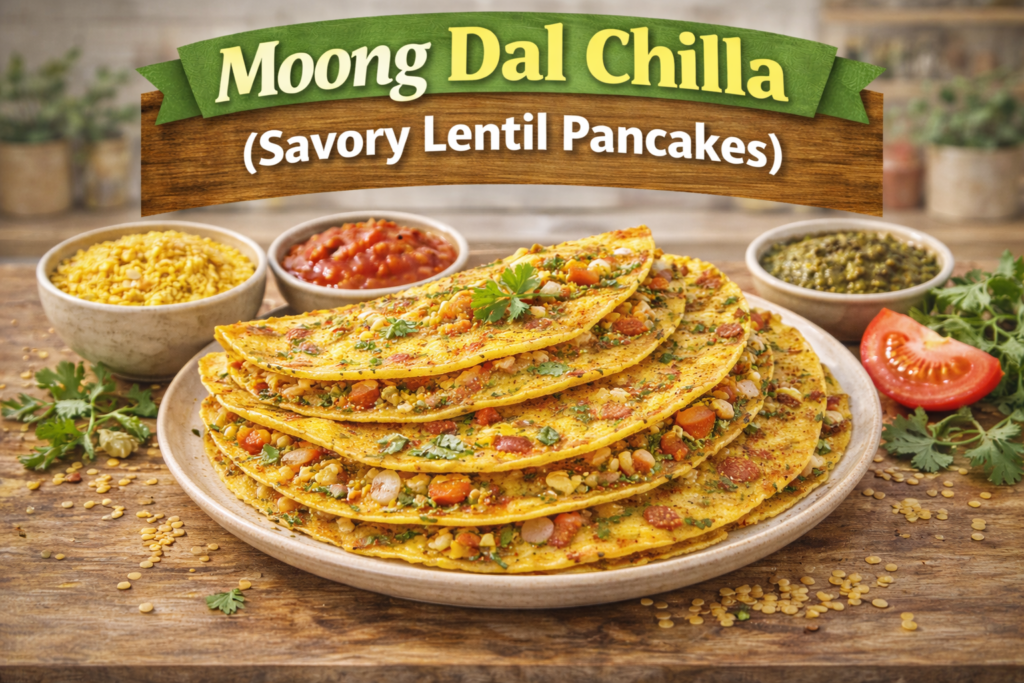
1. Moong Dal Chilla (Savory Lentil Pancakes)
These protein-packed savory pancakes are a staple in many North Indian homes. Made from split yellow moong dal, they are light, easy to digest, and incredibly versatile. You can customize them with your favorite vegetables and herbs.
Why It’s Great for Weight Loss: Moong dal is high in protein and fiber, low in fat, and keeps you full for hours. The added vegetables boost the nutrient content without many calories.
Time: 20 minutes (plus 30 minutes soaking)
Ingredients:
- 1 cup split yellow moong dal (dhuli moong), soaked for 30 minutes
- 1 small onion, finely chopped
- 1 small tomato, finely chopped
- 1-2 green chilies, finely chopped
- 1-inch piece of ginger, grated
- 2 tablespoons fresh coriander, chopped
- ½ teaspoon cumin seeds
- Salt to taste (use sparingly)
- Water, as needed
- Ghee or oil, for cooking
Instructions:
- Drain the soaked moong dal and rinse well. In a blender, grind the dal with a little water to a smooth, thick paste, similar to pancake batter consistency. Do not make it too runny.
- Transfer the batter to a bowl. Add the chopped onion, tomato, green chilies, ginger, coriander, cumin seeds, and salt. Mix well.
- Heat a non-stick tawa or griddle over medium heat. Lightly grease it with a few drops of ghee or oil.
- Pour a ladleful of batter onto the tawa and gently spread it in a circular motion to form a medium-thick pancake.
- Drizzle a few drops of oil or ghee around the edges. Cook until the bottom is golden brown and crisp, about 2-3 minutes.
- Flip carefully and cook the other side for another 1-2 minutes.
- Serve hot with mint chutney or a dollop of plain yogurt .
2. Vegetable Daliya (Savory Broken Wheat Porridge)
Daliya, or broken wheat, is a whole grain that is a wonderful alternative to refined carbohydrates. This savory porridge is cooked with vegetables and mild spices, creating a warm, comforting, and nutritious breakfast that will keep you energized all morning.
Why It’s Great for Weight Loss: Daliya is high in fiber, which promotes satiety and aids digestion. The vegetables add volume and nutrients with minimal calories.
Time: 20 minutes
Ingredients:
- ½ cup daliya (broken wheat)
- 1 teaspoon ghee or oil
- ½ teaspoon cumin seeds
- A pinch of asafoetida (hing)
- 1 small onion, finely chopped
- 1 small carrot, finely chopped
- ¼ cup green peas (fresh or frozen)
- ¼ cup finely chopped beans
- 1-2 green chilies, slit
- ½ teaspoon grated ginger
- 2 cups water
- Salt to taste
- Fresh coriander, for garnish
Instructions:
- Dry roast the daliya in a pan over medium heat for 2-3 minutes until it becomes fragrant. Remove and set aside.
- In the same pan, heat the ghee. Add the cumin seeds and let them sizzle. Add the asafoetida.
- Add the chopped onion and sauté until soft and translucent.
- Add all the chopped vegetables, green chilies, and ginger. Sauté for 2-3 minutes.
- Add the roasted daliya, water, and salt. Stir well.
- Bring to a boil, then reduce the heat to low, cover, and simmer for 10-12 minutes, until the daliya is cooked and has absorbed most of the water. The consistency should be like a thick porridge.
- Garnish with fresh coriander and serve hot .
3. Masala Omelette (Spiced Egg Omelette)
Eggs are a weight loss superstar, and this Indian-style masala omelette takes them to the next level. Packed with vegetables and aromatic spices, it is a quick, high-protein breakfast that comes together in minutes.
Why It’s Great for Weight Loss: Eggs are an excellent source of high-quality protein, which boosts metabolism and reduces appetite. The vegetables add fiber and micronutrients.
Time: 10 minutes
Ingredients:
- 2 large eggs
- 1 small onion, finely chopped
- 1 small tomato, finely chopped
- 1-2 green chilies, finely chopped
- 2 tablespoons fresh coriander, chopped
- ¼ teaspoon turmeric powder
- Salt and black pepper to taste
- 1 teaspoon oil or ghee, for cooking
Instructions:
- In a bowl, crack the eggs and beat them well with a fork or whisk until the yolks and whites are fully combined.
- Add the chopped onion, tomato, green chilies, coriander, turmeric, salt, and pepper to the beaten eggs. Mix thoroughly.
- Heat a small non-stick skillet over medium heat and add the oil or ghee.
- Pour the egg mixture into the pan and tilt to spread it evenly.
- Cook for 2-3 minutes until the bottom is set and lightly golden. You can lift the edges with a spatula to check.
- Carefully flip the omelette and cook the other side for another 1-2 minutes.
- Serve hot with a side of fresh salad or a slice of whole-grain toast .
4. Poha (Flattened Rice with Peanuts and Vegetables)
Poha is a beloved breakfast across India, particularly in Maharashtra and Madhya Pradesh. It is light, comforting, and surprisingly nutritious when made with plenty of vegetables and minimal oil. The flattened rice requires no cooking, just a quick rinse, making it one of the fastest breakfast options.
Why It’s Great for Weight Loss: Poha is a complex carbohydrate that provides sustained energy. When loaded with vegetables, it becomes a fiber-rich meal. Peanuts add healthy fats and protein, increasing satiety.
Time: 15 minutes
Ingredients:
- 1 cup thick poha (flattened rice)
- 1 tablespoon oil
- ½ teaspoon mustard seeds
- ½ teaspoon cumin seeds
- A pinch of asafoetida (hing)
- 8-10 curry leaves
- 1-2 green chilies, slit
- 1 small onion, finely chopped
- ¼ cup raw peanuts
- ¼ teaspoon turmeric powder
- Salt to taste
- 1 tablespoon lemon juice
- 2 tablespoons fresh coriander, chopped
- Optional: ¼ cup grated carrot or peas
Instructions:
- Place the poha in a colander and rinse it gently under cold running water for a few seconds until it softens. Do not soak, or it will become mushy. Drain well and set aside.
- Heat oil in a pan over medium heat. Add the mustard seeds and let them splutter.
- Add the cumin seeds, asafoetida, curry leaves, and green chilies. Sauté for a few seconds.
- Add the chopped onion and sauté until soft and translucent.
- Add the raw peanuts and roast for a minute or two. If using, add the grated carrot or peas and sauté for another minute.
- Add the turmeric powder and salt. Mix well.
- Add the soaked and drained poha to the pan. Gently mix everything together, ensuring the poha is coated with the spices and oil.
- Cover and cook on low heat for 2-3 minutes to allow the flavors to meld.
- Turn off the heat and stir in the lemon juice and fresh coriander.
- Serve hot .
5. Besan Chilla (Gram Flour Pancakes)
Besan chilla, also known as pudla, is another protein-packed savory pancake option. Made from chickpea flour (besan), these pancakes are gluten-free, high in protein and fiber, and can be customized with any vegetables you have on hand.
Why It’s Great for Weight Loss: Besan is rich in protein and fiber, which helps control appetite and stabilize blood sugar levels. It is also low on the glycemic index.
Time: 15 minutes
Ingredients:
- 1 cup besan (gram flour)
- 1 small onion, finely chopped
- 1 small tomato, finely chopped
- 1-2 green chilies, finely chopped
- 2 tablespoons fresh coriander, chopped
- ½ teaspoon cumin seeds
- ¼ teaspoon turmeric powder
- Salt to taste
- Water, as needed
- Oil or ghee, for cooking
Instructions:
- In a mixing bowl, combine the besan, onion, tomato, green chilies, coriander, cumin seeds, turmeric, and salt.
- Gradually add water while whisking to form a smooth batter with a pouring consistency, similar to regular pancake batter. Ensure there are no lumps.
- Heat a non-stick tawa or griddle over medium heat. Lightly grease it with oil or ghee.
- Pour a ladleful of batter onto the tawa and gently spread it in a circular motion to form a thin, even pancake.
- Drizzle a few drops of oil around the edges. Cook until the bottom is golden brown and crisp, about 2-3 minutes.
- Flip and cook the other side for another minute or two.
- Serve hot with mint chutney or a side of plain yogurt .
6. Ragi Dosa (Finger Millet Crepe)
Ragi, or finger millet, is a powerhouse of nutrition. It is rich in calcium, iron, and fiber, and has a low glycemic index, making it excellent for weight management. These crispy, savory dosas are a wonderful way to incorporate this ancient grain into your breakfast routine.
Why It’s Great for Weight Loss: Ragi is high in dietary fiber, which aids digestion and keeps you full. Its low glycemic index helps prevent blood sugar spikes and cravings.
Time: 25 minutes (plus 20 minutes resting)
Ingredients:
- ½ cup ragi flour (finger millet flour)
- ¼ cup rice flour
- ¼ cup finely chopped onions
- 1-2 green chilies, finely chopped
- 1 tablespoon fresh coriander, chopped
- ½ teaspoon cumin seeds
- Salt to taste
- Water, as needed
- Oil, for cooking
Instructions:
- In a large bowl, combine the ragi flour, rice flour, chopped onions, green chilies, coriander, cumin seeds, and salt.
- Gradually add water while whisking continuously to form a smooth, lump-free batter with a thin pouring consistency, slightly thinner than pancake batter. Let the batter rest for 15-20 minutes.
- Heat a non-stick tawa or dosa pan over medium heat. When hot, sprinkle a few drops of water on it; if they sizzle and evaporate, the pan is ready.
- Lightly grease the tawa with a few drops of oil. Pour a ladleful of batter onto the center of the tawa and quickly spread it in a circular motion to form a thin crepe.
- Drizzle a few drops of oil around the edges. Cook until the bottom is golden brown and crisp, and the edges start to lift.
- Carefully flip and cook the other side for 30-45 seconds if desired, or serve crisp on one side.
- Serve hot with chutney or sambar .
7. Sprouted Moong Salad (with a Twist)
While often eaten as a snack, a sprouted moong salad can make for a refreshing and incredibly nutritious breakfast, especially in warmer weather. Sprouting increases the nutrient content and digestibility of the moong beans. This version adds a flavorful Indian twist.
Why It’s Great for Weight Loss: Sprouted moong is low in calories but high in protein and fiber, making it incredibly satiating. It is also packed with vitamins and enzymes.
Time: 10 minutes
Ingredients:
- 1 cup sprouted moong beans (available at many stores or easily sprouted at home)
- 1 small onion, finely chopped
- 1 small tomato, finely chopped
- 1 cucumber, finely chopped
- 1-2 green chilies, finely chopped
- 2 tablespoons fresh coriander, chopped
- 1 tablespoon lemon juice
- ½ teaspoon chaat masala
- ¼ teaspoon black salt (or regular salt)
- Optional: a handful of pomegranate seeds for sweetness
Instructions:
- If using raw sprouts, you can blanch them in boiling water for 2 minutes for easier digestion, then drain and rinse with cold water. Raw sprouts are also fine if you prefer the crunch.
- In a large bowl, combine the sprouted moong, onion, tomato, cucumber, green chilies, and coriander.
- Sprinkle with lemon juice, chaat masala, and black salt. Toss well to combine.
- Garnish with pomegranate seeds if using. Serve immediately .
8. Methi Thepla (Fenugreek Flatbread)
Thepla is a Gujarati flatbread that is flavorful, satisfying, and travels well, making it perfect for busy mornings. Made with whole wheat flour and fresh fenugreek leaves (methi), it is packed with fiber and the unique, slightly bitter flavor of methi, which is known for its blood sugar-regulating properties.
Why It’s Great for Weight Loss: Whole wheat flour provides complex carbohydrates and fiber. Methi (fenugreek leaves) is known to help regulate blood sugar and aid digestion.
Time: 30 minutes
Ingredients:
- 1 cup whole wheat flour
- ½ cup chopped fresh fenugreek leaves (methi), tightly packed
- 2 tablespoons besan (gram flour) (optional, for extra protein)
- 1-2 green chilies, finely chopped
- ½ teaspoon ginger-garlic paste
- ½ teaspoon turmeric powder
- ½ teaspoon red chili powder
- ½ teaspoon cumin seeds
- Salt to taste
- 1 teaspoon oil, plus more for cooking
- Water, as needed, to knead the dough
Instructions:
- In a large bowl, combine the whole wheat flour, besan (if using), chopped methi, green chilies, ginger-garlic paste, turmeric, red chili powder, cumin seeds, and salt.
- Add 1 teaspoon of oil and mix well. Gradually add water and knead into a firm, smooth dough. Cover and let it rest for 10-15 minutes.
- Divide the dough into equal-sized balls. Roll each ball into a thin circle, about 6-7 inches in diameter, using a little dry flour to prevent sticking.
- Heat a tawa or griddle over medium heat. Place a rolled thepla on it. Cook for about 30 seconds, then flip.
- Apply a little oil or ghee on the cooked side, flip again, and apply oil on the other side. Cook until both sides have golden brown spots.
- Serve hot with plain yogurt or a pickle. These also keep well at room temperature for a day or two .
9. Low-Fat Vegetable Upma
Upma is a classic South Indian breakfast made from dry roasted semolina (rava or sooji). While the traditional version can be heavy on oil, this lighter version uses minimal oil and loads up on vegetables to make it a healthy, satisfying meal.
Why It’s Great for Weight Loss: Using minimal oil and adding plenty of vegetables increases the fiber content and volume of the dish without adding many calories. Rava provides sustained energy.
Time: 15 minutes
Ingredients:
- ½ cup coarse rava (semolina)
- 1 teaspoon oil or ghee
- ½ teaspoon mustard seeds
- ½ teaspoon cumin seeds
- A pinch of asafoetida (hing)
- 8-10 curry leaves
- 1-2 green chilies, slit
- 1 small onion, finely chopped
- 1 small carrot, finely chopped
- ¼ cup green peas (fresh or frozen)
- ¼ cup finely chopped beans
- 1½ cups water
- Salt to taste
- 1 tablespoon lemon juice
- Fresh coriander, for garnish
Instructions:
- Dry roast the rava in a pan over low heat, stirring constantly, until it becomes fragrant and slightly changes color, about 3-4 minutes. Remove and set aside.
- In the same pan, heat the oil. Add the mustard seeds and let them splutter.
- Add the cumin seeds, asafoetida, curry leaves, and green chilies. Sauté for a few seconds.
- Add the chopped onion and sauté until soft.
- Add all the chopped vegetables and sauté for 2-3 minutes.
- Add the water and salt. Bring to a boil.
- Reduce the heat to low. Slowly add the roasted rava to the boiling water while stirring continuously with a whisk to prevent lumps from forming.
- Cover and cook on low heat for 2-3 minutes until all the water is absorbed and the upma is cooked through.
- Turn off the heat, stir in the lemon juice and fresh coriander. Serve hot .
10. Masala Bhurji with Whole Wheat Toast
This is a deconstructed version of the classic egg bhurji, served with whole wheat toast for a complete, satisfying breakfast. It is protein-packed, flavorful, and comes together in minutes.
Why It’s Great for Weight Loss: Eggs provide high-quality protein, while whole wheat toast offers complex carbohydrates and fiber. The spices add flavor without calories.
Time: 10 minutes
Ingredients:
- 2 large eggs
- 1 small onion, finely chopped
- 1 small tomato, finely chopped
- 1-2 green chilies, finely chopped
- 1 teaspoon ginger, grated
- ¼ teaspoon turmeric powder
- Salt and black pepper to taste
- 1 teaspoon oil or ghee
- 2 slices whole wheat bread, toasted
- Fresh coriander, for garnish
Instructions:
- In a bowl, lightly beat the eggs with a fork. Do not overbeat; a few streaks are fine.
- Heat oil in a small non-stick pan over medium heat. Add the chopped onion and sauté until soft.
- Add the ginger and green chilies. Sauté for 30 seconds.
- Add the chopped tomato and cook until it softens slightly.
- Add the turmeric powder and salt. Mix well.
- Pour the beaten eggs into the pan. Let them set for a few seconds, then start stirring continuously with a spatula, scrambling the eggs.
- Cook until the eggs are just set but still soft and moist, about 2-3 minutes. Do not overcook.
- Sprinkle with black pepper and garnish with fresh coriander.
- Serve the bhurji immediately with the whole wheat toast .
Tips for Making Healthy Indian Breakfasts a Habit
- Prep the Night Before: Soak moong dal for chilla, sprout moong beans, or chop vegetables for upma and poha the night before. This makes morning preparation lightning-fast .
- Make Batches: Theplas can be made in batches and stored at room temperature for a couple of days or refrigerated for longer. Chilla batter can be refrigerated overnight.
- Listen to Your Hunger: Eat until you are satisfied, not stuffed. A good breakfast should carry you comfortably to your next meal without extreme hunger or energy crashes .
- Stay Hydrated: Start your day with a glass of water. Sometimes thirst is mistaken for hunger .
- Pair with Protein: If you choose a carb-focused breakfast like poha or upma, pair it with a side of yogurt or a glass of buttermilk to increase the protein content and boost satiety .
Conclusion ( 10 Healthy Indian Breakfast Ideas for Weight Loss )
Weight loss does not have to mean bland, boring breakfasts or skipping the meal altogether. Indian cuisine offers a treasure trove of healthy, flavorful, and satisfying options that can support your goals while delighting your taste buds. From the protein punch of Moong Dal Chilla to the fiber-rich comfort of Vegetable Daliya, from the quick convenience of Masala Omelette to the nutritional powerhouse of Ragi Dosa, these 10 breakfast ideas prove that eating for weight loss can be a delicious and joyous experience.
The key is to embrace whole foods, prioritize protein and fiber, and enjoy the incredible diversity of flavors that Indian cooking has to offer. So, start your day with intention and nourishment. Your body, your taste buds, and your weight loss journey will all thank you. Happy cooking and happy eating.
2 thoughts on “10 Healthy Indian Breakfast Ideas for Weight Loss”